
Search
Remove Ads
Advertisement
Search Results

Article
Why Were Hiroshima & Nagasaki Bombed in WWII?
The decision to drop the atomic bomb in August 1945 was taken to avoid further Allied casualties in the Pacific War by forcing Japan into an immediate surrender. Another reason was, as the victors jostled...

Article
Daily Life in Medieval Japan
Daily life in medieval Japan (1185-1606 CE) was, for most people, the age-old struggle to put food on the table, build a family, stay healthy, and try to enjoy the finer things in life whenever possible. The upper classes...

Image
Obsidian used for Prehistoric Japanese Tools
This piece of obsidian dates from the Paleolithic period or c. 18000 BCE, and it was uncovered in Engarau-cho on Japan's Hokkaido island. It helped prehistoric Japanese people in making stone tools. (Tokyo...
Image
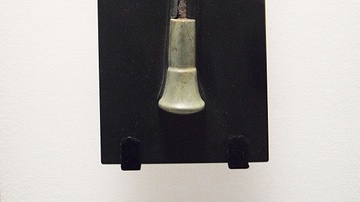
Ancient Japanese Ceremonial Staff
This ceremonial object in the shape of a staff is made of Jasper. It is Japanese and it dates to the 4th century CE, during the Kofun period. (Tokyo National Museum)

Definition
Seven Lucky Gods
In Japanese folklore the Shichifukujin are the Seven Lucky Gods who may also be known as the Seven Gods of Happiness or the Seven Gods of Good Fortune. The seven gods are in fact of diverse origin as some are originally from Buddhism...

Image
The Twelve Elder Titans in Greek Mythology - according to Theogony (Generations of the Gods) by Hesiod
In early Greek cosmology, the Twelve Elder Titans were the children of the primordial deities Gaia (Earth) and Ouranos (Sky), representing an older divine order...

Video
History of Dogs in Ancient Roman Society and Mythology
Dogs were highly valued in ancient Rome, as they were in other cultures, and the Roman dog served many of the same purposes as it did in, say, Egypt and Persia - as hunters, guardians, and companions...
Definition
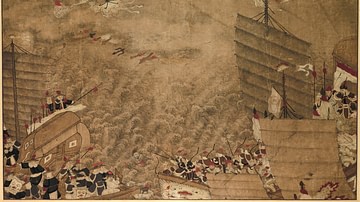
Wako - The Medieval Pirates of Southeast Asia
Wako (aka wokou and waegu) is a term used to refer to Japanese (but also including Chinese, Korean, and Portuguese) pirates who plagued the seas of East Asia from Korea to Indonesia, especially between the...

Definition
Meiji Restoration
The Meiji Restoration was a political event that took place in Japan in 1868. In it, the Tokugawa family, a warrior clan that had ruled Japan for more than 260 years, was overthrown by a group of political activists who proclaimed...

Article
Food & Agriculture in Ancient Japan
The diet of ancient Japan was heavily influenced by its geography as an archipelago, foodstuffs and eating habits imported from mainland Asia, religious beliefs, and an appreciation for the aesthetic appearance...
