
Search
Remove Ads
Advertisement
Search Results

Definition
Shishunaga Dynasty
The Shishunaga Dynasty (also Sishunaga/Shaishunaga Dynasty) ruled the Magadha Kingdom in ancient India from c. 413 BCE to c. 345 BCE (in some sources from 421 BCE). It is said to be the third imperial dynasty of Magadha after...

Definition
Mesrop Mashtots
Mesrop Mashtots (360/370 - c. 440 CE) invented the Armenian alphabet in 405 CE. Besides greatly increasing levels of literacy in the country, the language permitted ordinary people to read the Bible for the first time, thus helping...
Definition
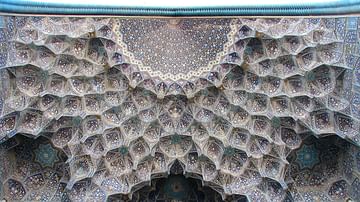
Muqarnas
Muqarnas is a three-dimensional architectural decorative element that flourished in its most complete form mainly during the Islamic period and is most pervasively used in domes and semi-domes. One of the key features of this mesmerizing...

Definition
Tyr
Tyr (Old Norse: Týr) is one of the battle-gods of Norse mythology, according to the main sources on the topic, the literary works called the Eddas. He takes part in two adventures, one involving a monster to whom he sacrifices his hand...
Image
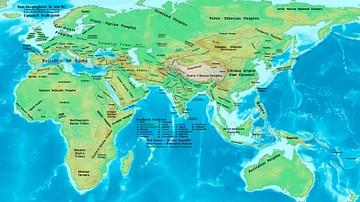
The Eastern Hemisphere, 100 BC
A map showing the major empires, kingdoms, tribes, and ethnic groups of the Eastern Hemisphere in 100 BC.
Definition
Eucratidia
Eucratidia was a Greek town in Bactria, one of the easternmost area ever controlled by the Greeks, located at the modern site of Aï Khanum in North-Eastern Afghanistan. The history of this city is still rather unknown, but it seems...
Definition
Euthydemid
The Euthydemids were a Greco-Bactrian and Indo-Greek dynasty of approximately 25 kings, named after its founder Euthydemos. The dynasty lasted between circa 230 BC and 10 BC, according to numismatic evidence. The numismatic emblems...

Image
Map of the Scythian World, c. 700–300 BCE - Scythians, Saka, and Cultures of the Eurasian Steppe
Between c. 700 and 300 BCE, the Scythians and related Saka peoples inhabited vast regions of the Eurasian steppe, from the northern Black Sea to Central Asia and...
Image
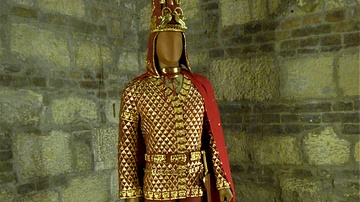
Scythian Golden Man
This costume is a replica of the clothing and armour found in the burial mound of the so-called "Golden Man", in Issyk, present day Kazakhstan. The scourge and sword found among the possessions are also included. The individual...

Article
What Were the Consequences of WWII?
The consequences of the Second World War (1939-45) were many and varied. Nazi Germany, Fascist Italy, and military-dominated Japan were all defeated. Many occupied countries were liberated and regained their freedom...
