
Search
Remove Ads
Advertisement
Search Results
Article
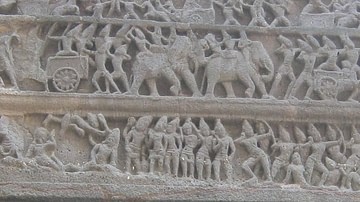
Elephants In Ancient Indian Warfare
Elephants were used in the ancient Indian army, irrespective of regions, dynasties, or points in time; their importance was never denied and continued well into the medieval period as well. The ready availability...

Article
Chariots in Ancient Indian Warfare
The chariot was the elite arm of ancient Indian armies in the Vedic (1500 BCE – 1000 BCE) and Epic periods (described by the Ramayana and the Mahabharata, 1000-600 BCE) because of the advantages it conferred and...

Article
Ancient Roman Society
Rome began as a small city on the banks of the Tiber River in Italy. The Latin tribes (also known as the Latini or Latians) inhabited the region c. 1000 BCE but the founding of the city is dated to 753 BCE. The family was...

Article
Aztec Society
Aztec society was hierarchical and divided into clearly defined classes. The nobility dominated the key positions in the military, state administration, judiciary, and priesthood. While traders could become extremely wealthy and...

Article
Etruscan Society
The social organisation of the ancient Etruscans, a civilization which flourished in central Italy between the 8th and 3rd century BCE, can only be pieced together from a collection of rather unsatisfactory sources which, unfortunately...

Definition
French and Indian War - The Final Clash of Empires in North America
The French and Indian War (1754-1763) was the last great colonial conflict waged between Great Britain and France in North America. Often considered a theater of the global Seven Years'...

Article
Ancient Greek Society
Although ancient Greek Society was dominated by the male citizen, with his full legal status, right to vote, hold public office, and own property, the social groups which made up the population of a typical Greek city-state...
Article
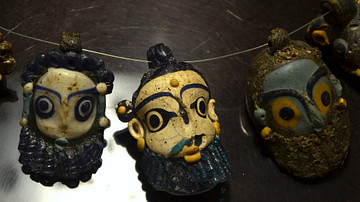
Carthaginian Society
The society of Carthage was dominated by an aristocratic trading class who held all of the important political and religious positions, but below this strata was a cosmopolitan mix of artisans, labourers, mercenaries, slaves...

Article
Ancient Christianity’s Effect on Society & Gender Roles
Christianity began as a sect of Judaism in Judea in the 1st century CE and spread to the cities of the Eastern Roman Empire and beyond. In these cities, non-Jews, Gentiles, wanted to join the movement...

Definition
Sepoy
A sepoy was an Indian soldier in the armies of various states and European trading companies in the Indian subcontinent and then, from the second half of the 19th century, in the British Indian Army. Recruited from many different population...
