
Search
Did you mean: Minoan Architecture?
Remove Ads
Advertisement
Search Results

Image
Ancient Indian Ship
This relief depicts an ancient Indian ship likely to have been used by Indian adventurers sailing to Java, Indonesia.
Location: Borobudur temple, Magelang, Central Java, Indonesia

Image
The 5 Classical Orders of Architecture - Doric, Ionic, Corinthian, Tuscan & Composite
The five classical orders of architecture: Doric, Ionic, Corinthian, Tuscan, and Composite, are systems of proportion, structure, and ornament that organize the relationship...

Image
Map of the Trade in the Indian Ocean 15th-16th century - From Afro-Asian Exchange to European Intervention
The Indian Ocean trade network of the 15th and 16th centuries formed one of the most extensive and dynamic systems of exchange in the premodern world, linking...
Image
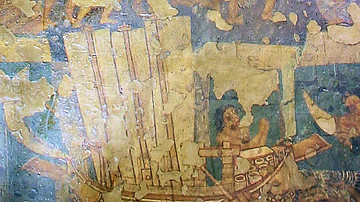
Ancient Indian Ship
This Ajanta mural depicts an ancient Indian ship with high stem and stern and three oblong sails attached to three masts. Steering-oars can also be seen. Location: Cave No. 2, Ajanta Caves, Aurangabad District, Maharashtra...

Image
Ajanta Architecture
The caves of Ajanta were built between 2nd century BCE and 6th century CE. Here beautifully decorated inner pillars and trifolium from Cave 26 can be seen.

Article
Trail of Tears: Memorial and Protest of the Cherokee Nation by John Ross
The Trail of Tears was the forced relocation of the "Five Civilized Tribes" – Cherokee, Chickasaw, Choctaw, Muscogee Creek, and Seminole – from their ancestral lands in the Southeastern...

Image
Map of the Indian Rebellion (Sepoy Mutiny) of 1857
The Indian Rebellion of 1857 was a transformative uprising that shook British rule in South Asia. Sparked in May 1857 by mutinous sepoys ((from Persian sepāhī, for soldier)) of the East India Company...
Image
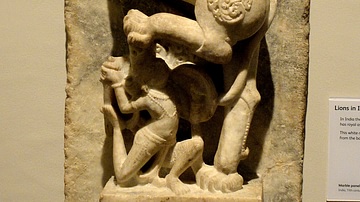
Sculpture of an Indian Lion
In India, the lion is known as the Lord of Beasts and has royal associations. This marble white panel is an architectural figure from the base of an Indian temple. From India, 11th century CE. (National Museum of Scotland...

Image
North America in the French and Indian War 1754–1763 - A Colonial War and the Roots of American Revolution
This map illustrates the course and key developments of the French and Indian War (1754–1763), the North American theater of the global Seven Years' War between...

Image
French and Indian War Battle Scene
Daniel Day-Lewis, Madeleine Stowe, and Jodhi May in The Last of the Mohicans (1992). Photo by Morgan Creek Productions
The movie is set in 1757 during the French and Indian War.
