
Search
Remove Ads
Advertisement
Search Results

Definition
Neo-Assyrian Empire
The Neo-Assyrian Empire (912-612 BCE) was the final stage of the Assyrian Empire, stretching throughout Mesopotamia, the Levant, Egypt, Anatolia, and into parts of Persia and Arabia. Beginning with the reign of Adad Nirari...

Definition
Wampanoag Confederacy
The Wampanoag Confederacy was a coalition of over 30 Algonquian-speaking Native American tribes who lived in the region of modern-day New England, specifically from Rhode Island down through Massachusetts and parts of Connecticut...

Definition
Assignat
The assignat was a paper bill issued by France between 1789 and 1796, during the French Revolution (1789-1799). First issued in the form of bonds, the assignat was meant to stimulate France's economy as a quick means to pay off national...

Definition
Sulla
Lucius Cornelius Sulla (138-78 BCE) was a ruthless military commander, who first distinguished himself in the Numidian War under the command of Gaius Marius. His relationship with Marius soured during the conflicts that would follow and...

Article
Effects of the Black Death on Europe
The outbreak of plague in Europe between 1347-1352 – known as the Black Death – completely changed the world of medieval Europe. Severe depopulation upset the socio-economic feudal system of the time but the experience...
Article
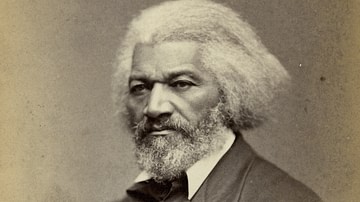
What to the Slave is the Fourth of July? - Frederick Douglass' Challenge to America
"What, to the Slave, is the Fourth of July?" is Frederick Douglass' masterwork of oration, delivered on 5 July 1852 at the Corinthian Hall in Rochester, New York. Also sometimes...

Curriculum Collection
AP World History Unit 5 - Revolutions (c. 1750–1900)
Two major revolutions remade the world between 1750 and 1900. The first was a revolution of the mind: thinkers of the Enlightenment argued that authority was based upon reason and consent, rather than...

Article
Ten Juneteenth Myths
The celebration of Juneteenth – originally known as "Freedom Day" – began on 1 January 1866 in Texas and, since then, a number of myths have grown up around the event it commemorates: the issuance of General Order No. 3 in...

Article
Causes of the American Revolution
The American Revolution (c. 1765-1789) was a definitive event in Western history that saw the emergence of the United States and helped spawn additional waves of revolutions and societal upheavals on both sides of...

Article
Henry IV of France & the Edict of Nantes
Henry of Navarre became the nominal ruler of France after the assassination of Henry III of France (r. 1574-1589), whose marriage to Louise de Lorraine produced no heir. After years of attempts to deny the...
