
Search
Remove Ads
Advertisement
Search Results

Definition
Ancient Celtic Sculpture
The sculpture of the ancient Celts between 700 BCE and 400 CE is nothing if not varied as artists across Europe developed their own ideas and borrowed what interested them from neighbouring cultures. Early Celtic stone...
Definition
Kappa
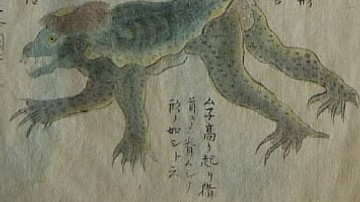
A kappa is a Japanese mythological water sprite or, literally, "river child" (河童). One of the more popularly known yōkai (Japanese mythological creature) in Japan, kappa are generally green or yellow, have a tortoise-like shell on their...

Definition
Epictetus
Epictetus (l.c. 50 - c. 130 CE) was a Stoic philosopher best known for his works The Enchiridion (the handbook) and his Discourses, both foundational works in Stoic philosophy and both thought to have been written down from his teachings...
Definition
Hildegard of Bingen
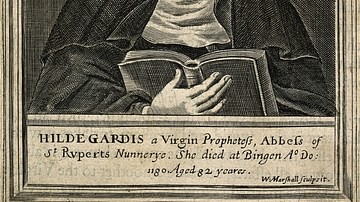
Hildegard of Bingen (also known as Hildegarde von Bingen, l. 1098-1179) was a Christian mystic, Benedictine abbess, and polymath proficient in philosophy, musical composition, herbology, medieval literature, cosmology, medicine...

Definition
Melissus of Samos
Melissus of Samos (l. c. 5th century BCE) was a Greek philosopher of the Eleatic School, considered the third great proponent of that philosophy's claim that reality is One, after Parmenides (l. c. 485 BCE) and Zeno of Elea (l...

Definition
Ancient Greek Medicine
In ancient Greek medicine illness was initially regarded as a divine punishment and healing as, quite literally, a gift from the gods. However, by the 5th century BCE, there were attempts to identify the material causes for...
Definition
Pazuzu - The Mesopotamian Demon of Destruction and Protection
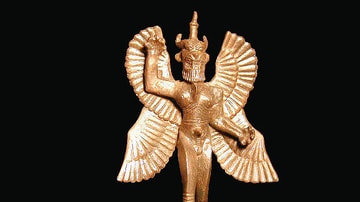
Pazuzu is a Babylonian/Assyrian demon who was most popular in the first millennium BCE. He was the son of Hanbi (also Hanba), king of the demons of the underworld, and brother of Humbaba, the...

Definition
Leonardo da Vinci
Leonardo da Vinci (1452-1519) was an Italian Renaissance artist, architect, engineer, and scientist. He is renowned for his ability to observe and capture nature, scientific phenomena, and human emotions in all media. Leonardo’s...

Definition
Giotto
Giotto di Bondone (b. 1267 or 1277 - d. 1337 CE), usually referred to as simply Giotto, was an Italian painter and architect whose work was hugely influential in the history of Western art. Giotto is most famous today for the cycle of...

Definition
Ҫatalhöyük
Ҫatalhöyük is one of the largest Neolithic settlements ever discovered. Built more than 9000 years ago in modern Konya Plain, central Turkey, it is known in archaeology as a proto-city, a link between the cave-dwellings of prehistoric...
