
Search
Remove Ads
Advertisement
Search Results
Article
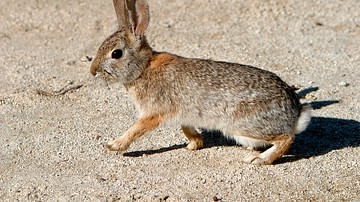
How the Rabbit Lost His Tail
How the Rabbit Lost His Tail is a Sioux legend, part origin myth and part didactic tale, explaining why the rabbit looks as it does, why the owl is a night bird, and how one should treat a member of one’s family and...
Article
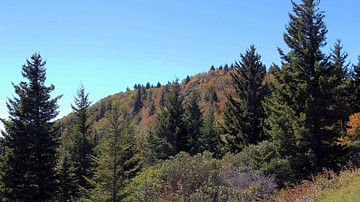
Tsul'kălû', The Slant-Eyed Giant
Tsul'kălû', The Slant-Eyed Giant is a myth of the Cherokee nation and is among the most popular. The legend relates the story of the great giant, Tsul'kălû', his marriage to a Cherokee maiden, and how the people broke...
Article
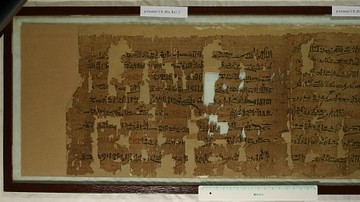
The Satire of the Trades
The literature of ancient Egypt is as rich and varied as any other culture. From the inscriptions of the Old Kingdom of Egypt (c. 2613-2181 BCE) through the Love Poems of the New Kingdom (c. 1570 - c. 1069 BCE) the Egyptian...

Article
Ancient Persian Gods, Heroes, and Creatures - The Complete List
The term 'mythology' comes from the Greek mythos (story-of-the-people) and logos (word or speech), meaning the spoken story of a people. Every civilization of the ancient world developed a...

Article
Hymn to Nisaba - A Praise Song for the Sumerian Goddess of Writing
The Hymn to Nisaba (circa 3rd millennium BCE) is a poem praising Nisaba, the Sumerian goddess of writing and accounts who also served as scribe of the gods. The poem is officially dedicated...
Article
The Daughter of the Sun
The Daughter of the Sun is a Cherokee origin myth explaining how Uktena, the great horned serpent, came to be, as well as why those who die cannot return to life. The story also explains the respect due to the rattlesnake...

Image
Traditional House, Oualata
A traditional banco (pounded earth) house, Oualata (Walata), Mauritania.

Image
Burghley House, Lincolnshire
Burghley House, Stamford, Lincolnshire, England. It was built in the 1560s CE for William Cecil, Lord Burghley (1520-1598 CE), a minister in the government of Elizabeth I of England (r. 1558-1603 CE) for 40 years.

Image
Descartes' House
Maison Descartes, the house where the philosopher René Descartes (1596-1650) lived in the Netherlands.
De Weteringschans, Amsterdam.

Image
House of Immanuel Kant
An 1842 illustration showing the house in Kaliningrad, Russia (then Köningsberg, East Prussia) of the German philosopher Immanuel Kant (1724-1804).
