
Search
Remove Ads
Advertisement
Search Results

Article
Battle of Germantown
The Battle of Germantown (4 October 1777) was a major battle of the American Revolutionary War (1775-1783) in which General George Washington launched an unsuccessful assault on the British army garrisoned in Germantown, Pennsylvania...
Article
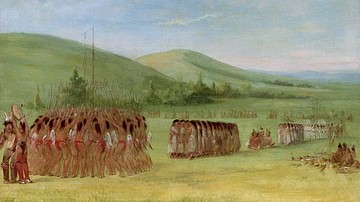
Ûñtsaiyĭ', the Gambler
Ûñtsaiyĭ', the Gambler is a legend of the Cherokee nation, known as a Wonder Story, which features supernatural characters, sometimes interacting with mortals, sometimes with each other. In Ûñtsaiyĭ', the Gambler, all the...

Article
Women's Work in Ancient Egypt
Women in ancient Egypt had greater rights than in any other civilization of the time. They could own land, initiate divorce, own and operate their own business, become scribes, priests, seers, dentists, and doctors...

Article
Hesiod on the Birth of the Gods
The Greek poet Hesiod (c. 700 BCE) is most famous for his works Theogony and Works and Days. In this passage from Theogony, Hesiod relates the birth of the gods from cosmic Chaos and follows the lineage through the...

Article
Mesopotamian Education - Creating the First Written Works in History
Mesopotamian education was invented by the Sumerians following the creation of writing circa 3600/3500 BCE. The earliest schools were attached to temples, but later schools were established...

Article
Fear of Insurrection - Harriet Jacobs on Nat Turner's Rebellion
Fear of Insurrection comes from Incidents in the Life of a Slave Girl (1861) by Harriet Jacobs (l. c. 1813-1897) describing the reaction of the White community of Edenton, North Carolina, to...

Article
The Curse of Agade - Naram-Sin's Fictional Battle with the Gods
The Curse of Agade (also given as The Cursing of Agade) is a poem dated to the Ur III period of Mesopotamia (circa 2112 to circa 2004 BCE), though it is thought to be somewhat older in origin...
Article
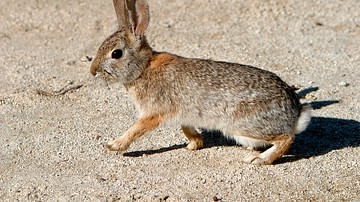
How the Rabbit Lost His Tail
How the Rabbit Lost His Tail is a Sioux legend, part origin myth and part didactic tale, explaining why the rabbit looks as it does, why the owl is a night bird, and how one should treat a member of one’s family and...

Article
Tsul'kălû', The Slant-Eyed Giant
Tsul'kălû', The Slant-Eyed Giant is a myth of the Cherokee nation and is among the most popular. The legend relates the story of the great giant, Tsul'kălû', his marriage to a Cherokee maiden, and how the people broke...
Article
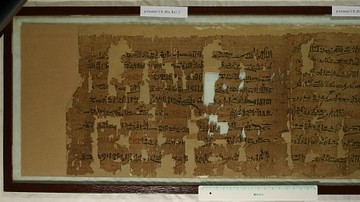
The Satire of the Trades
The literature of ancient Egypt is as rich and varied as any other culture. From the inscriptions of the Old Kingdom of Egypt (c. 2613-2181 BCE) through the Love Poems of the New Kingdom (c. 1570 - c. 1069 BCE) the Egyptian...
