
Search
Remove Ads
Advertisement
Search Results
Image
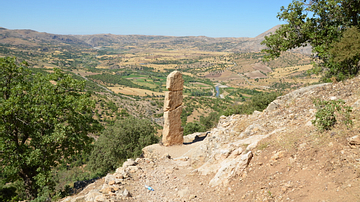
Arsameia on the Nymphaios
Arsameia on the Nymphaios (Arsameia ad Nymphaeum) is located at the foot of Mount Nemrut in Eastern Turkey. In the 1st century BCE, it was a royal seat and the summer capital of the Kingdom of Commagene, an ancient kingdom...

Image
The Acropolis and Ancient Athens
An image illustrating the evolution of the Athenian Acropolis (a fortified citadel and state sanctuary of the goddess Athena) and the city of Athens as it emerged from the devastation and ruin of the Greco-Persian...

Image
Map of the Roman Rule in the Levant, c. 200 CE
The Roman Levant around 200 CE, during the height of imperial consolidation under the Severan dynasty (193 - 235 CE), formed one of the empire’s most dynamic and interconnected frontier regions. Administratively...

Image
Epicurus Bust, Vatican Museums
A marble bust of the Hellenistic philosopher Epicurus (341-270 BCE), founder of Epicureanism. 2nd century CE Roman copy of an earlier Greek original. (Vatican Museums, Rome)
Image
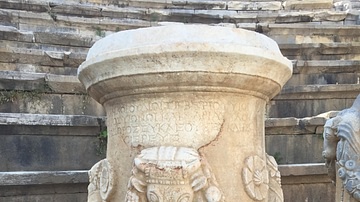
Cylindrical Altar, Metropolis
Three altars dedicated to Ceasar Augustus are found in the theater on the site of the ancient city of Metropolis. Metropolis was a Greco-Roman city situated between two of the great cities of antiquity, Ephesus and...

Image
Tower of the Winds (Athens)
The Tower of the Winds, also called Horologion of Androkinos, is an octagonal Pentelic marble clocktower located in the Roman Agora in Athens. The structure features a combination of sundials, a water clock and a wind...

Image
Statue of Asclepius from Cos
Asclepius was the god of medicine and healing. Marble. Hellenistic Period, 2nd century BCE. Copy of an original dating to the 5th century BCE. From Cos, Istankoy, in modern-day Greece. (Museum of Archaeology, Istanbul...

Image
Theatre at Stratonicea
The theatre at Stratonicea, erected in the Hellenistic period in the north slope of the south hill, its capacity was approximately 10,000 spectators.

Image
Greek Black-Glazed Pottery
Although known by this term, the pottery is not technically glazed. It evolved from the Greek Attic "Red-on-Black" pottery, but the images of heroes and gods that made the Attic vases famous were replaced by vegetal and...

Image
Nymphaeum in the Agora of Amathous, Cyprus
The nymphaeum and reservoir located to the north of the Agora of Amathous. It dates to the Hellenistic period but had major repairs done in 118 CE during the early reign of Hadrian.
