
Search
Remove Ads
Advertisement
Search Results
Definition
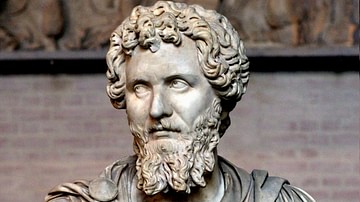
Septimius Severus
Lucius Septimius Severus was Roman emperor from April 193 to February 211 CE. He was of Libyan descent from Lepcis Magna and came from a locally prominent Punic family who had a history of rising to senatorial as well as consular...

Definition
Byzantine Empire
The Byzantine Empire existed from 330 to 1453. It is often called the Eastern Roman Empire or simply Byzantium. The Byzantine capital was founded at Constantinople by Constantine I (r. 306-337). The Byzantine Empire varied in...

Definition
Empuries
Empuries (also Emporiae or Emporion) was a Greek and then Roman colony on the northeastern coast of Spain. Thriving as a local and Mediterranean trading centre, it prospered from the 6th century BCE to the 2nd century CE. Several times...

Definition
Ereshkigal - Mesopotamian Queen of the Dead
Ereshkigal (also known as Irkalla and Allatu) is the Mesopotamian Queen of the Dead, who rules the underworld. Her name translates as "Queen of the Great Below" or "Lady of the Great Place." She was responsible...

Definition
Hellenistic Warfare
When Alexander the Great died in 323 BCE, he left behind an empire devoid of leadership. Without a named successor or heir, the old commanders simply divided the kingdom among themselves. For the next three decades, they fought...

Definition
Masada
Masada (“fortress” in Hebrew) is a mountain complex in Israel in the Judean desert that overlooks the Dead Sea. It is famous for the last stand of the Zealots (and Sicarii) in the Jewish Revolt against Rome (66-73 CE). Masada is a UNESCO...
Definition
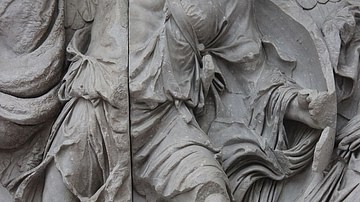
Uranus
Uranus (also spelt Ouranos) is the personification of heaven and the sky in Greek mythology. His Roman counterpart is Caelus. Gaia (Earth) gave birth to Uranus and chose him to be her equal. She lay with him, resulting in the birth of...

Definition
D-Day
D-Day was the first day of Operation Overlord, the Allied attack on German-occupied Western Europe, which began on the beaches of Normandy, France, on 6 June 1944. Primarily US, British, and Canadian troops, with naval and air support...

Definition
Herodotus
Herodotus (l. c. 484 – 425/413 BCE) was a Greek historian famous for his work Histories. He was called The Father of History by the Roman writer Cicero, who admired him, but has also been rejected as The Father of Lies by critics...

Definition
Leonardo da Vinci
Leonardo da Vinci (1452-1519) was an Italian Renaissance artist, architect, engineer, and scientist. He is renowned for his ability to observe and capture nature, scientific phenomena, and human emotions in all media. Leonardo’s...
