
Search
Remove Ads
Advertisement
Search Results

Image
Map of the Mauryan Empire, c. 321 - 185 BCE
A map illustrating the rise and expansion of the Mauryan empire, the first pan-Indian empire that covered most of India and parts of present-day Iran. Chandragupta Maurya, the first ruler, seized the opportunity...

Definition
Constantinople
Built in the seventh century BCE, the ancient city of Byzantium proved to be a valuable city for both the Greeks and Romans. Because it lay on the European side of the Strait of Bosporus, the Emperor Constantine understood its...

Image
Map of the Rise and Fall of the Mexica (Aztec) Empire - Alliance, Expansion, and Tribute Power in Mesoamerica
The Mexica (commonly referred to as the Aztecs) emerged as a dominant power in central Mexico during the Late Postclassic period, culminating in the formation...
Definition
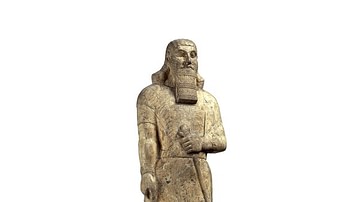
Ashurnasirpal II
Ashurnasirpal II (r. 884-859 BCE) was the third king of the Neo-Assyrian Empire. His father was Tukulti-Ninurta II (r. 891-884 BCE) whose military campaigns throughout the region provided his son with a sizeable empire and the...

Definition
Assur - The Supreme God of the Ancient Assyrians
Assur (also Ashur, Anshar) is the god of the ancient Assyrians who was elevated from a local deity of the city of Ashur to the supreme god of the Assyrian pantheon. His attributes were drawn from earlier...

Definition
Cilicia Campestris
Cilicia Campestris was one of the six districts of the Roman province of Cilicia organized by Pompey the Great (l. c. 106-48 BCE) in 64 BCE. The name translates roughly into “Cilicia of the Plains” and corresponds to the earlier...

Definition
Ögedei Khan
Ogedei Khan (aka Ogodei) ruled the Mongol Empire from 1229 to 1241. He was the third son of Genghis Khan (r. 1206-1227), the empire's founder. Ogedei's accomplishments included creating a new capital at Karakorum, establishing a system...

Video
The Rise and Fall of the Inca Empire: A Short History
The Inca civilisation flourished in Peru and surrounding areas between 1400 and 1533 CE. Prior to the Inca being dominant in Western South America, the Chimu occupied the area until 1470 when the...

Video
Marcus Aurelius: The Philosopher & Emperor of the Roman Empire
Marcus Aurelius (r. 161 to 180 CE) was a Roman emperor best known as the last of the Five Good Emperors of Rome (following Nerva, Trajan, Hadrian, and Antoninus Pius) and as the author of the...

Image
Map of the Growth of Christianity in the Roman Empire - From Early Communities to Imperial Christianity, 30–451
The growth of Christianity in the Roman Empire from the 1st to the 5th centuries transformed a small religious movement rooted in Roman Judaea into one...
