
Search
Remove Ads
Advertisement
Search Results

Definition
Roman Medicine
Roman medicine was greatly influenced by earlier Greek medicine and literature but would also make its own unique contribution to the history of medicine through the work of such famous experts as Galen and Celsus. Whilst there...

Definition
Iliad
Homer's Iliad describes the final year of the Trojan War, a legendary conflict between an alliance of Greek cities and the city of Troy in Anatolia. It was probably written in the 8th century BCE after a long oral tradition. The Greeks...
Definition
Zagreus
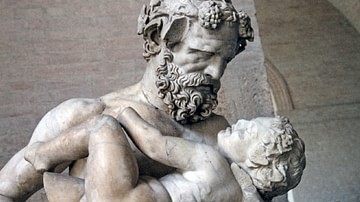
In ancient Greek mythology, Zagreus is a god closely associated with the wine god Dionysus, the underworld, and hunting. A son of Zeus and Persephone, he is known in the Orphic tradition as the first incarnation of Dionysus, whilst other...

Interview
Interview: American School of Classical Studies at Athens
The American School of Classical Studies in Greece has been running its operations since the 19th century CE, with excavations across the country and an academic program that runs throughout the...

Lesson Pack
Arts & Culture in Ancient Greece
We have prepared four lesson plans including classroom activities, assignments, homework, and keys as well as: - Multiple choice quiz questions in an excel format. - Glossary of keywords and concepts in an excel...

Definition
Hyperborea
In Greek mythology, Hyperborea was the land located to the far north of the known world and it was so remote it was considered even beyond the North Wind. There a legendary race known as the Hyperboreans lived and worshipped the sun...

Definition
Miltiades
Miltiades (c. 555-489 BCE) was the Athenian general who defeated the Persians at the Battle of Marathon in 490 BCE. The Greeks faced a Persian force of superior numbers led by the commanding admiral Datis, who had been sent by their...

Definition
Medea (Play)
The tragedy Medea was written in 431 BCE by Euripides (c. 484 – 407 BCE). Euripides authored at least 90 plays of which 19 have survived intact. As with the plays by Sophocles and Aeschylus, the audience was already well aware of...

Definition
Agamemnon (Play)
The play Agamemnon was written by one of the greatest Greek tragedians Aeschylus (c. 525 – 455 BCE), “Father of Greek Tragedy.” Older than both Sophocles and Euripides, he was the most popular and influential of all tragedians...

Definition
Ancient Afghanistan
The ancient history of Afghanistan, a landlocked country in Central Asia, is full of fascinating cultures, from early nomadic tribes to the realms of Achaemenid Persia, the Seleucids, the Mauryans, the Parthians, and Sasanians...
