
Search
Remove Ads
Advertisement
Search Results

Definition
Xibalba
Xibalba (Shee-bal-ba) was the name the K'iche Maya gave to the underworld. For the Yucatec Maya the underworld was known as Metnal. The name Xibalba translates as 'Place of Fright', which indicates the terror the place had in the Maya...

Definition
Masada
Masada (“fortress” in Hebrew) is a mountain complex in Israel in the Judean desert that overlooks the Dead Sea. It is famous for the last stand of the Zealots (and Sicarii) in the Jewish Revolt against Rome (66-73 CE). Masada is a UNESCO...

Definition
Xolotl - The Dog God of the Aztecs
Xolotl was the dog god of the Mexica people, commonly known as the Aztecs. He is represented in codices, statuary, and other extant examples of Aztec art as a dog or a god with the head of a dog. While this figure...

Definition
Hades
Hades was both the name of the ancient Greek god of the underworld (Roman name: Pluto) and the name of the shadowy place below the earth which was considered the final destination for the souls of the dead. Perhaps the most feared of...

Definition
Tyche
In Greek mythology, Tyche is the goddess and personification of good luck, chance, and fortune. Tyche's popularity grew after the Classical period when many cities and officials across the Greek world and the Mediterranean adopted her...

Definition
Thera
Thera is the ancient name for both the island of Santorini in the Greek Cyclades and the name of the volcano which famously erupted on the island in the middle Bronze Age. The 17th century BCE eruption covered Akrotiri, the most important...

Definition
Cyrene
Cyrene (modern-day Shahhat, Libya) was a vital cultural center and port of trade in North Africa founded in 631 BCE by Greek colonists from the island of Thera. The city is best known as the birthplace of the philosopher Aristippus of...
Definition
Tonatiuh
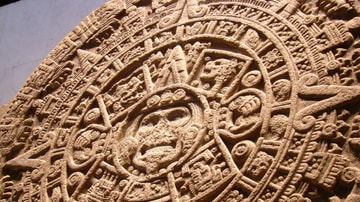
Tonatiuh, 'Turquoise Lord,' was the 5th and present sun in the Aztec view of the cosmos and the fierce sun god of several other Postclassic Mesoamerican cultures, including the Toltecs. It was thought that only the regular offering...

Definition
Works and Days
Works and Days is an epic poem written in dactylic hexameter, credited to the 8th-century BCE Greek poet Hesiod. Hesiod is generally remembered for two epic works, Theogony and Works and Days but, like his contemporary Homer, he...

Definition
The Eumenides
The Eumenides is a play written by Aeschylus (c 525 – 455 BCE), the “Father of Greek Tragedy,” the most popular and influential of all tragedians of his era. The Eumenides was the third play of a trilogy, The Oresteia, with the...
