
Search
Remove Ads
Advertisement
Search Results
Definition
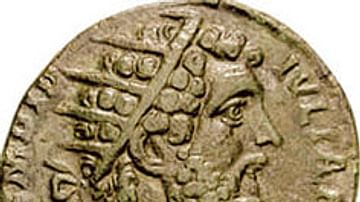
Didius Julianus
Didius Julianus was Roman emperor from March to June 193 CE. On March 28, 193 CE Roman Emperor Pertinax was assassinated by the Praetorian Guard, and like his predecessor Commodus, he left no apparent successor. Two possible claimants...

Definition
Ezekiel
Ezekiel was both a priest and a prophet who lived in the 6th century BCE. The prophets of Israel were oracles (a term for a person as well as a place) for ways in which humans communicated with their gods. The oracle was possessed by...

Definition
The Constantinian Excerpts - The 10th Century Byzantine Encyclopedia
The Constantinian Excerpts, or Excerpta Constantiniana is the conventional name given to the mid-10th Century Byzantine palace encyclopedia commissioned by the scholar emperor Constantine...

Definition
Herakleia Lynkestis
Herakleia Lynkestis (Heraclea Lyncestis; Ἡράκλεια Λυγκηστίς) was a city in the ancient kingdom of Macedon not far from modern Bitola, founded c. 358 BCE by Philip II of Macedon (r. 359-336 BCE) as a governing centre for his...

Definition
Anastasios I
Anastasios I ruled the Byzantine empire from 491 to 518 CE. Although his tax and monetary reforms were both popular and successful, the emperor could not repair the damaging split in the Christian Church created by his predecessors...

Image
Roman Theater, Caesarea Maritima
In his description of Caesarea Maritima, Flavius Josephus mentions a theater and amphitheater. With several restorations through the years, the theater, as it commands a view of the sea, is still used today. About...

Definition
Aytap
Aytap is the modern name for the ancient city of Iotapa (sometimes given as Iotape and Iotape Philadelphos) in Cilicia. The city's ruins are located in southern Turkey near modern day Alanya (ancient Coracesium). The city was founded...

Article
Sack of Rome 410 CE
In August of 410 CE Alaric the Gothic king accomplished something that had not been done in over eight centuries: he and his army entered the gates of imperial Rome and sacked the city. Although the city and, for a time, the...

Article
A Brief History of Veterinary Medicine
The English word 'veterinarian' as defining one who provides medical care to animals, comes from the Latin verb veheri meaning “to draw” (as in "pull") and was first applied to those who cared for “any animal...

Article
The Arch of Constantine, Rome
The Arch of Constantine I, erected in c. 315 CE, stands in Rome and commemorates Roman Emperor Constantine's victory over the Roman tyrant Maxentius on 28th October 312 CE at the battle of Milvian Bridge in Rome. It...
