
Search
Remove Ads
Advertisement
Search Results

Definition
Edward Gibbon
Edward Gibbon (1737-1794) was an English historian most famous for his influential work The History of the Decline and Fall of the Roman Empire, volume one of which was published in 1776, with the final sixth volume coming in 1788...

Article
Christian Celibate Martyrs
Martyrologies, a unique genre of Christian literature, appeared from the 2nd century CE. A martyrology tells the story of the suffering and ordeals of a Christian martyr and details their trial and execution. A shared...
Definition
Second Dynasty of Egypt
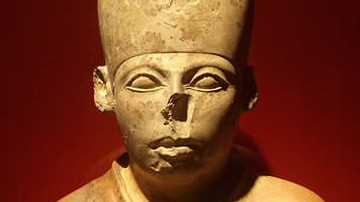
The Second Dynasty of Egypt (c. 2890 - c. 2670 BCE) rose from the turmoil which ended the first and was marked by uprisings (or, at least, internal difficulties) throughout. The precise cause of this civil unrest is unclear...

Definition
Nile
The world's longest river, located in Egypt, the Nile flows 4,132 miles (6,650 kilometres) northward to the Mediterranean Sea (a very unusual direction for a river to take). It was considered the source of life by the ancient Egyptians...
Definition
Isis
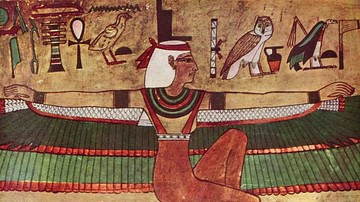
Isis is an ancient Egyptian goddess who became the most popular and enduring of all the Egyptian deities. Her name comes from the Egyptian Eset, ("the seat") which referred to her stability and also the throne of Egypt as she was considered...

Definition
Ragnarök - The Cataclysmic Battle of Norse Mythology
Ragnarök is the cataclysmic battle between the forces of chaos and those of order in Norse mythology, ending the world and killing most of the gods and their adversaries, leading to the birth of a new...

Definition
Northern Crusades
The Northern or Baltic Crusades were military campaigns organised by popes and western rulers to convert pagans to Christianity in the 12th to 15th century. Unlike in the Holy Land, where military campaigns were aimed at liberating...
Article
Ancient Egyptian Symbols
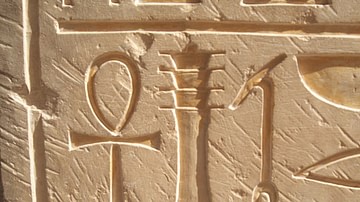
Religion in ancient Egypt was fully integrated into the people's daily lives. The gods were present at one's birth, throughout one's life, in the transition from earthly life to the eternal, and continued their care for...

Definition
Bible
The Bible takes its name from the Latin Biblia ('book' or 'books') which comes from the Greek Ta Biblia ('the books') traced to the Phoenician port city of Gebal, known as Byblos to the Greeks. Writing became associated with Byblos as...

Definition
Apocrypha and Pseudepigrapha
In the 2nd century CE, as Christianity was in the process of becoming an independent religion, a body of literature emerged that scholars classify as apocrypha and pseudepigrapha. Apocrypha (Greek: apokryptein, "to...
