
Search
Remove Ads
Advertisement
Search Results

Article
Early Muslim Conquests (622-656 CE)
Islam arose as a religious and socio-political force in Arabia in the 7th century CE (610 CE onwards). The Islamic Prophet Muhammad (l. 570-632 CE), despite facing resistance and persecution, amassed a huge following...

Article
The Armies of the Crusades
The armies of the Crusades (11th-15th centuries CE), which saw Christians and Muslims struggle for control of territories in the Middle East and elsewhere, could involve over 100,000 men on either side who came from all...

Definition
Alexander the Great
Alexander III of Macedon, better known as Alexander the Great (l. 21 July 356 BCE – 10 or 11 June 323 BCE, r. 336-323 BCE), was the son of King Philip II of Macedon (r. 359-336 BCE) who became king upon his father's death in...
Interview
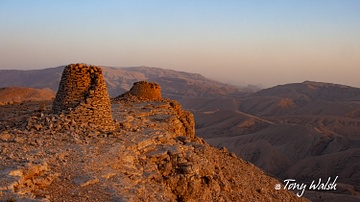
Oman: The Land of Frankincense - Tony Walsh
While Oman is perhaps the most mysterious corner of the Arabian peninsula to Westerners, the country retains a strong sense of identity, a pride in its ancient past, and unique surprises in the domain of...

Article
The Mystery of the Great Sphinx
Buried for most of its life in the desert sand, an air of mystery has always surrounded the Great Sphinx, causing speculation about its age and purpose, method of construction, concealed chambers, role in prophecy...

Article
The Spread of Islam in Ancient Africa
Following the conquest of North Africa by Muslim Arabs in the 7th century CE, Islam spread throughout West Africa via merchants, traders, scholars, and missionaries, that is largely through peaceful means whereby...

Article
Nazca Lines
The Nazca civilization flourished in southern Peru between 200 BCE and 600 CE and amongst their most famous legacies are the geoglyphs and lines - often referred to as Nazca Lines - along the eastern coast of Peru and northern Chile...

Article
Ten Should-Be Famous Women of Early Christianity
There were many famous women of early Christianity who made significant contributions to the development of the faith but have since been largely forgotten. Some have been canonized by the Church or recognized...

Definition
Sparta
Sparta was one of the most important city-states in ancient Greece and was famous for its military prowess. The professional and well-trained Spartan hoplites with their distinctive red cloaks and long hair were probably the best and...

Definition
Arminius
The Cherusci noble Arminius (c. 18 BCE - 19 CE) led the resistance to Roman conquest of Germania during the years 9-16 CE. Likely raised as a child hostage in Rome, Arminius gained command of a German auxiliary cohort in the Roman army...
