
Search
Did you mean: Circe?
Remove Ads
Advertisement
Search Results

Definition
Hecate
Hecate (Hekate) is a goddess of Greek mythology capable of both good and evil. She was associated with witchcraft, magic, the Moon, doorways, and creatures of the night like hell-hounds and ghosts. Hecate often carries a torch in her...

Definition
Ghosts in the Ancient World - The Return of the So-Called Dead
A belief in an afterlife was central to every major civilization of the ancient world and this encouraged the recognition of the reality of ghosts as the spirits of the departed who, for one...

Definition
Furies
The Furies (or Erinyes, sing. Erinys) were creatures from Greek mythology who exacted divine retribution from those guilty of wrong-doing. Crimes which were especially likely to incur their wrath were those involving one's family and...

Definition
Prometheus Bound
The Greek dramatist Aeschylus (c. 525 - c. 456 BCE) is considered one of the greatest tragic playwrights of his generation. He is often referred to as the “Father of Greek Tragedy.” Older than both Sophocles and Euripides, he...
Definition
Chiron
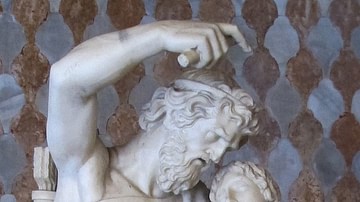
Chiron (also spelt Cheiron) is a wise centaur (half-man, half-horse) in Greek mythology, who was a friend and tutor to many legendary Greek heroes, including Achilles and Jason. Chiron's parentage differed from the rest of the centaurs...

Definition
Harriet Jacobs
Harriet Jacobs (l. c. 1813-1897) was a former slave, abolitionist, and author of Incidents in the Life of a Slave Girl (1861), her autobiography, describing her life as a slave in North Carolina, her flight to freedom in the North...

Definition
Literature - The Artistic Expression of the Human Experience
Literature (from the Latin Littera meaning "letters" and referring to an acquaintance with the written word) is the written work of a specific culture, sub-culture, religion, philosophy, or the...

Definition
Cuneiform - The Writing System That Made History
Cuneiform is a system of writing first developed by the ancient Sumerians of Mesopotamia circa 3600/3500 BCE. It is considered the most significant among the many cultural contributions of the Sumerians...

Definition
Apsaras and Gandharvas
In the Vedas, the apsaras are water nymphs, often married to the gandharvas. By the time the Puranas and the two epics were composed, the apsaras and gandharvas had become performing artists to the gods; the apsaras are singers...

Definition
Thesmophoriazusae
The Thesmophoriazusae (also called The Poet & the Women or Women at the Thesmophoria) is a two-act comedy play written in 411 BCE by the great Greek comic playwright, Aristophanes. The play's principal focus is on the Greek tragedian...
