
Search
Remove Ads
Advertisement
Search Results

Definition
Kamakura Period
The Kamakura Period or Kamakura Jidai (1185-1333 CE) of medieval Japan began when Minamoto no Yoritomo (1147-1199 CE) defeated the Taira clan at the Battle of Dannoura in 1185 CE. The period is named after Kamakura, a coastal...

Definition
Shogun
The shoguns of medieval Japan were military dictators who ruled the country via a feudal system where a vassal's military service and loyalty was given in return for a lord's patronage. Established as an institution by the first shogun...

Definition
Jerash
Jerash (aka Gerasa, Gerash or Gerasha) is the capital and the largest city of the Jerash Governorate in Jordan, but in ancient times it was one of the wealthiest and most cosmopolitan cities in the ancient Near East. Settled by humans...

Definition
Songhai Empire
The Songhai Empire (aka Songhay, c. 1460 - c. 1591) covered what is today southern Mauritania and Mali. It replaced the Mali Empire (1240-1645) as the most important state in West Africa. Originating as a smaller kingdom along...

Definition
Hilda of Whitby
Hilda of Whitby (also known as Saint Hilda of Whitby, l. 614-680 CE) was the founder and abbess of the monastery at Whitby, Kingdom of Northumbria, Britain. She was a Northumbrian princess who converted to Christianity with the...

Definition
Book of the Heavenly Cow
The Book of the Heavenly Cow is an ancient Egyptian text dealing with the rebellion of humanity against the sun god Ra, his destruction of the rebels through the goddess Hathor, the reversal of this decision and Ra's mercy...
Definition
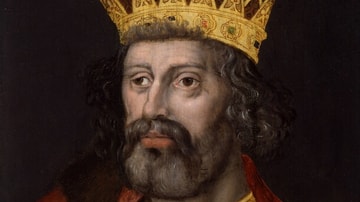
Edward I of England
Edward I of England reigned as king from 1272 to 1307 CE. Edward succeeded his father Henry III of England (r. 1216-1272 CE) and was known as 'Longshanks' for his impressive height and as 'the Hammer of the Scots' for his repeated...
Definition
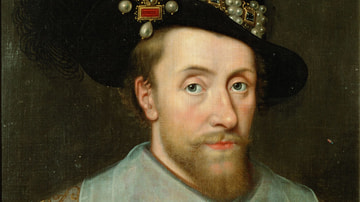
James I of England
James I of England (r. 1603-1625), who was also James VI of Scotland (r. 1567-1625), was the son of Mary, Queen of Scots, and he unified the thrones of Scotland and England following the death of Queen Elizabeth I of England...

Definition
Nicolaus Copernicus
Nicolaus Copernicus (1473-1543 CE) was a Polish astronomer who famously proposed that the Earth and other planets revolved around the Sun in a heliocentric system and not, as then widely thought, in a geocentric system where...

Definition
Chief Powhatan
Wahunsenacah, also known as Chief Powhatan (l. c. 1547 - c. 1618) was the head of the Powhatan Confederacy of Native Americans who inhabited the region of the modern-day State of Virginia, USA, which they knew by the name of Tsenacommacah...
