
Search
Remove Ads
Advertisement
Search Results
Image
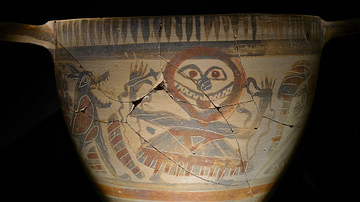
Etruscan-Corinthian Cup with the Gorgon Medusa
Etruscan-Corinthian Cotyla cup with the image of the Gorgon Medusa, from Pontecagnano, beginning 6th century BCE. Museo Nazionale dell' Agro Picentino (inv. 35272). Photo taken at the "Fantastic Creatures...

Image
Corinthian Alabastron Vase
A Corinthian alabastron vase depicting two lions and an owl, 595-500 BCE. These vessels were used for storing perfumes and fine oils. (Getty Villa, Malibu)
Image
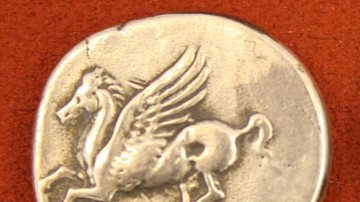
Pegasus, Corinthian Silver Stater
Silver Stater from Corinth, 386-307 BCE.
Obverse: Pegasus,
Reverse: Athena.
Alpha Bank Numismatics Collection, Kerkyra, Corfu.
Image
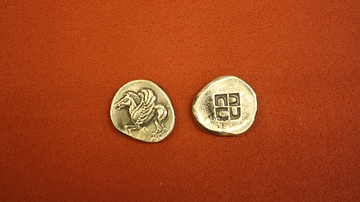
Pegasus & Swastika, Corinthian Silver Stater
Silver stater from Corinth, 525-500 BCE. O: Pegasus. R: Incuse square of swastika design.
Image
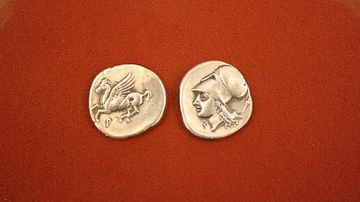
Pegasus & Athena, Corinthian Silver Stater
Silver stater from Corinth, 386-307 BCE. O: Pegasus. R: Head of Athena.

Definition
Corinth
Corinth was a Greek, Hellenistic and Roman city located on the isthmus which connects mainland Greece with the Peloponnese. Surrounded by fertile plains and blessed with natural springs, ancient Corinth was a centre of trade, had a naval...

Image
Waterloo Helmet
The "Waterloo Helmet" is an example of a ceremonial horned helmet from Celtic La Tene culture. The helmet was originally decorated with pieces of red glass, and would have been even more visually striking when it was made. It...
Image
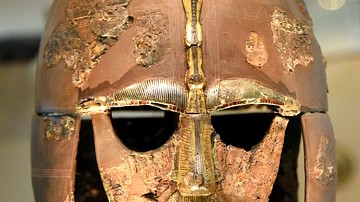
The Sutton Hoo Helmet
The Sutton Hoo helmet from the ship-burial at Sutton Hoo, Mound 1, England, late 500s to early 600. This is one of the only four complete helmets that survive from Anglo-Saxon England. It has been painstakingly reconstructed...

Image
Illyrian Helmet from the Battle of Plataea
This helmet, beaten from a single sheet of bronze, features hammered out (repoussé) ridges along the top. The Illyrian type is found in mainland Greece and former Yugoslavia, dating from the 6th to early 5th...

Image
Celtic Helmet, British Museum
A peaked copper-alloy helmet decorated in La Tene style. This style of helmet inspired the Roman "coolus" type helmet, which was one of the more common helmets used by Roman soldiers until its gradual replacement by...
