
Search
Remove Ads
Advertisement
Search Results

Article
The Vikings in Iceland
The medieval sources on the discovery and settlement of Iceland frequently refer to the explorers as “Vikings” but, technically, they were not. The term “Viking” applies only to Scandinavian raiders, not to Scandinavians...
Article
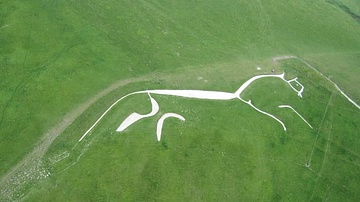
The White Horse of Uffington
The cutting of huge figures or geoglyphs into the turf of English hillsides has been going on for more than 3000 years. There are 56 hill figures scattered around England, with the vast majority on the chalk downlands...

Definition
Chartres Cathedral
The Notre Dame Cathedral (Cathedral of Our Lady of the Assumption) of Chartres in northern France was built in its current Romanesque and Gothic form between 1190 and 1220. A grander version of earlier cathedrals on the same...

Definition
Roman Coinage
Roman coins were first produced in the late 4th century BCE in Italy and continued to be minted for another eight centuries across the empire. Denominations and values more or less constantly changed but certain types such as the...

Definition
Lake Titicaca
Lake Titicaca is located between Bolivia and Peru and, at an altitude of 3,800 metres (12,500 feet), it is the world's highest navigable lake. The tundra plain known as the altiplano stretches to the south and was the location of...

Definition
Ancient Egyptian Art
The artworks of ancient Egypt have fascinated people for thousands of years. The early Greek and later Roman artists were influenced by Egyptian techniques and their art would inspire those of other cultures up to the present...

Definition
Renaissance Art
The art of the Renaissance period in Europe (1400-1600 CE) includes some of the most recognisable and best-loved paintings and sculptures in the world. Masters were often skilled in both painting and sculpture, and by studying...

Definition
Egyptian Faience
Egyptian faience is a glassy substance manufactured expertly by the ancient Egyptians. The process was first developed in Mesopotamia, first at Ur and later at Babylon, with significant results but faience production reached its...

Definition
Sargonid Dynasty
The Sargonid Dynasty was the last ruling house of the Neo-Assyrian Empire from 722-612 BCE, beginning with the reign of Sargon II and ending with fall of the Neo-Assyrian Empire. Some of the most famous kings in the history of...

Definition
Mansa Musa I - The Richest Man in History?
Mansa Musa I was the ruler of the Mali Empire in West Africa from 1312 to 1337. Controlling territories rich in gold and copper, and monopolising trade between the north and interior of the continent, Mali...
