
Search
Remove Ads
Advertisement

 This answer was generated by
 Search Results

Definition
Copper in Antiquity
Copper was probably the first metal used by ancient cultures, and the oldest artefacts made with it date to the Neolithic period. The shiny red-brown metal was used for jewellery, tools, sculpture, bells, vessels, lamps, amulets...

Definition
Bronze Age Aegean
The Bronze Age (c. 3000-1000 BCE) is the period when cultures were either using, producing, or trading bronze. Several cultures flourished around the Aegean Sea during this period: the Minoan civilization on Crete, the Mycenaean...

Definition
Stone Age
From the dawn of our species to the present day, stone-made artefacts are the dominant form of material remains that have survived to today concerning human technology. The term “Stone Age” was coined in the late 19th century CE by...

Definition
Greek Dark Age
The Greek Dark Age (c. 1200 to c. 800 BCE, overlapping with the Iron Age, c. 1200-550 BCE) is the modern-day term for the period in Greek history following the Bronze Age Collapse when the Mycenaean Civilization fell and the Linear...

Definition
Bronze Age Collapse - The Decline and Fall of Mediterranean Civilization
The Bronze Age Collapse (also known as Late Bronze Age Collapse) is a modern-day term referring to the decline and fall of major Mediterranean civilizations during the 13th-12th centuries...
Definition
Orichalcum
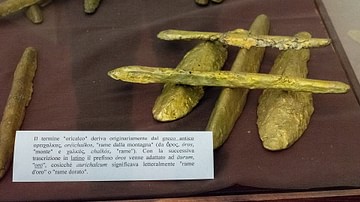
Orichalcum ("mountain copper") or aurichalcum ("gold copper") was a metal used in coins during ancient times. Orichalcum was a golden-yellow coloured mixture consisting of both copper and zinc and referred to as brass. The Romans...

Article
Mesopotamian Effects on Israel During the Iron Age
The Iron Age in the traditional Ancient Near Eastern chronology ranges from somewhere around 1200 BCE to 333 BCE. It begins from the era when it was first thought iron came to be used up to the ascendency...
Article
Stone Age Tools
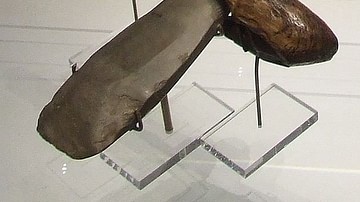
As the Stone Age covers around 99% of our human technological history, it would seem there is a lot to talk about when looking at the development of tools in this period. Despite our reliance on the sometimes scarce archaeological...

Article
Women in the Viking Age
Although women in the Viking Age (c. 790-1100 CE) lived in a male-dominated society, far from being powerless, they ran farms and households, were responsible for textile production, moved away from Scandinavia to help settle...

Article
Bronze Age Sicily
The Bronze Age in Sicily, considered one of the most important periods of the island's prehistory, witnessed the establishment of a unitary and in some ways artistically vibrant culture. The three main phases of the period take...
