
Search
Remove Ads
Advertisement
Search Results

Article
Treasure & Booty in the Golden Age of Piracy
During the Golden Age of Piracy (1690-1730), pirates were first and foremost after gold, silver, and jewels, but if these could not be grabbed, then a ship’s cargo would be taken for resale at a pirate haven...
Image
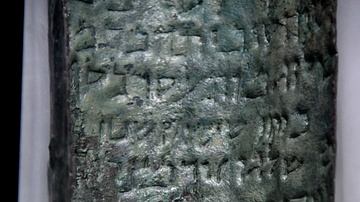
The Dead Sea's Copper Scroll
The Copper Scroll was discovered inside Cave 3 (Q3) at Qumran (Khirbat Qumran or Wadi Qumran). This is the only known inscription on metal from the Dead Sea area. The scroll originally consisted of three sheets of copper...

Article
Pirate Weapons in the Golden Age of Piracy
Pirates in the so-called Golden Age of Piracy (1690-1740) used all manner of weapons to attack ships and relieve them of their precious cargoes. Heavy cannons, muskets, pistols, cutlasses, and grenades were...

Article
Prehistoric Alpine Stilt Houses
Alpine stilt houses are a unique and fascinating aspect of prehistoric architecture in the Alps, which provide valuable insights into the lives and culture of the ancient communities. The houses were built by prehistoric...
Article
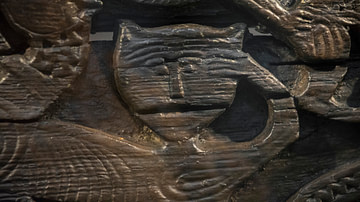
Norse Pets in the Viking Age
Pets were as important to the Norse of the Viking Age (c. 790-1100 CE) as they were to any other culture, past or present. The Vikings kept dogs and cats as pets and both feature in Norse religious iconography and literature...

Article
Baroque, Age of Contrasts - Exhibition Interview Schweizerisches Landesmuseum
The Baroque era, which lasted from roughly 1580 and 1780, was a time of enormous contrasts: Opulence and innovation, on the one hand; death and crises, on the other. Ongoing religious...
Image
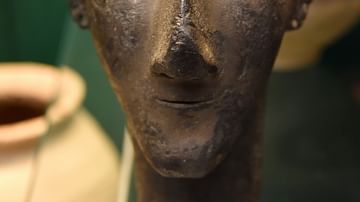
Copper Alloy Female Mask
This is a copper alloy mask which was part of a woman's statue. The eye sockets were inlaid. The chin is long and sharp. The forehead continues upward as a central tang (now broken off). There are two holes at the sides...
Image
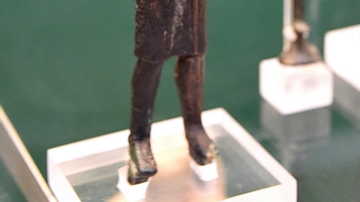
Copper Alloy Male Figure from Ancient Lebanon
From the mountain region; found in a hoard with 4 other similar figurines. The hands might have held a weapon. From Gezzine (Jezzine), modern-day Lebanon. Middle Bronze Age, 2400-2000 BCE. (The British...
Image
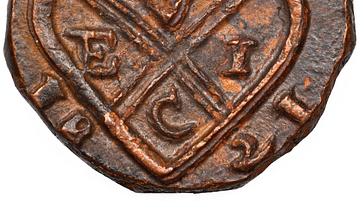
Copper Coin of the East India Company
A copper coin minted by the British East India Company (EIC). From Bombay, 1821.
Image
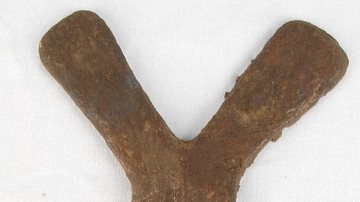
Copper Curency Ingot, Luba Kingdom
A copper cross used as a currency by such central African states as the Kingdom of Luba (15-19th century CE). Height: 19.5 cm. (British Museum, London)
