
Search
Remove Ads
Advertisement
Search Results

Definition
Great Zimbabwe
Great Zimbabwe is a ruined city near Masvingo, central Zimbabwe which was inhabited between c. 1100 to c. 1550 (flourishing c. 1300 - c. 1450) in the region’s Late Iron Age. Capital of the Kingdom of Zimbabwe of the Bantu-speaking...
Definition
Dead Sea Scrolls
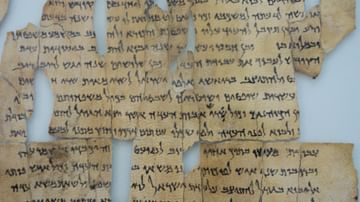
The Dead Sea Scrolls (DSS) are a collection of scrolls found in the desert east of Jerusalem on the shore of the Dead Sea. They represent the largest manuscript collections of texts from the Second Temple Period found in the area...

Article
Trade in Ancient Greece
Trade was a fundamental aspect of the ancient Greek world and following territorial expansion, an increase in population movements, and innovations in transport, goods could be bought, sold, and exchanged in one part of...

Definition
Sargon of Akkad - From Gardener to King of the Four Corners of the World
Sargon of Akkad (reign 2334-2279 BCE) was the king of the Akkadian Empire of Mesopotamia, the first multinational empire in history, who united the disparate kingdoms of the region under...
Video
Ice Age art: the female gaze
Sculptures of the female form are a feature of the exhibition Ice Age art: arrival of the modern mind. Here, exhibition curator Jill Cook and artist Ghislaine Howard explore these representations of women in Ice Age...

Definition
Viking Ships
Viking ships were built by the Scandinavians during the Viking Age (c. 790 CE - c. 1100 CE) and were used both within Scandinavia and beyond for purposes ranging from being the most important means of transport to trade and warfare...

Definition
Abraham, the Patriarch
In Judaism, Christianity, and Islam, Abraham is a venerated patriarch whose relationship with God provides the foundational story for God's beneficial relationship with humanity. According to biblical tradition (and some...

Definition
Greek Alphabet
The Greek Alphabet developed from the Phoenician script at some point around the 8th century BCE. The earlier Mycenaean Linear B script, used primarily for lists and inventories, had been lost during the Greek Dark Age, and the...

Definition
Hallstatt Culture
The Hallstatt culture is named after the site of that name in Austria and it flourished in central Europe from the 8th to 6th century BCE. The full period of its presence extends from c. 1200 to c. 450 BCE - from the Late Bronze...

Definition
Norns - Female Figures of Fate
The norns were supernatural female entities responsible for the fates of all living beings in Viking Age Scandinavia. Associated with Yggdrasil, the world tree and central element of the nine realms of Norse cosmology...
