
Search
Remove Ads
Advertisement
Search Results

Definition
Augsburg Confession
The Augsburg Confession is the affirmation of faith of the Lutheran Church written by Philip Melanchthon (l. 1497-1560) and presented at the Diet of Augsburg in June 1530. The document attempted to reconcile differences between...
Definition
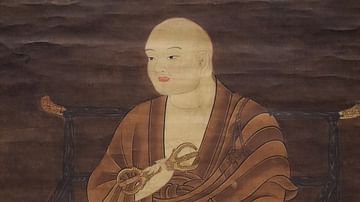
Kukai - Japan's Founder of Shingon Buddhism
Kukai or Kobo Daishi (774-835 CE) was a scholar, poet, and monk who founded Shingon Buddhism in Japan. The monk became the country's most important Buddhist saint and has been credited with all manner of minor...
Definition
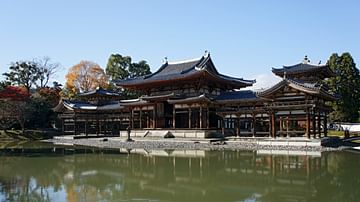
Heian Period
The Heian Period of Japanese history covers 794 to 1185 CE and saw a great flourishing in Japanese culture from literature to paintings. Government and its administration came to be dominated by the Fujiwara clan who eventually were...

Definition
Prambanan
Prambanan (Javanese: Rara Jonggrang) is a Hindu temple complex dating from the 9th century CE located near Bokoharjo, on the island of Java in Indonesia. Prambanan is the largest Hindu temple in Indonesia and one of the largest Hindu...

Definition
Tang Dynasty
The Tang Dynasty (618-907 CE) was one of the greatest in Imperial Chinese history. It was a golden age of reform and cultural advancement which lay the foundation for policies which are still observed in China today. The second emperor...

Definition
Todaiji
Todaiji is an ancient temple complex in Nara, Japan. Founded in 738 CE and officially opened in 752 CE when Nara was the capital, the temple is the headquarters of the Buddhist Kegon sect. The temple has a 500-ton sculpture of the Buddha...

Definition
Seokguram Grotto
The Seokguram Grotto (Sokkuram) is a Buddhist cave temple constructed during the Unified Silla Period (668-935 CE) of ancient Korea. The 8th-century CE structure, located near the Bulguksa Temple on Mt. Toham at the ancient Silla...

Definition
Horyuji
The Horyuji Temple near Nara in Japan was founded in 607 CE by Prince Shotoku and is the only surviving Buddhist monastery from the Asuka Period in its original state. The complex, consisting of 48 listed buildings including a 5-storey...

Article
The Bronze Bells of Ancient Korea
The metalworkers of ancient Korea were highly skilled artists and some of their finest surviving works are the large bronze bells cast for use in Buddhist temples and monasteries. Both the Unified Silla kingdom and...
Definition
Hachiman - Origin of the Kamikaze Wind
Hachiman is the ancient Shinto god or kami of war, divination, and culture. He is famously credited with sending the kamikaze or 'divine wind' which twice dispersed the invading fleets of Mongol ruler Kublai Khan...
