
Search
Remove Ads
Advertisement
Search Results

Definition
Chanakya
Chanakya (l. c. 350-275 BCE, also known as Kautilya and Vishnugupta) was prime minister under the reign of Chandragupta Maurya (r. c. 321-c.297 BCE), founder of the Mauryan Empire (322-185 BCE). He is best known as the author of the...
Article
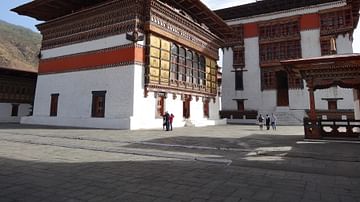
Bhutan: Land of the Thunder Dragon
It is a breathtaking flight with dramatic sweeps over fertile valleys and blue pine forests. You fly past Mt. Everest, Mt. Kanchenjunga and Mt. Gangkhar Puensum, which is the highest, unclimbed mountain in the world...

Definition
Khatam
Khatam is a decoration technique used exclusively on wooden objects and one of Iran's finest and most delicate crafts consisting of geometrical patterns. Small squares or triangles are laid next to one another in different compositions...

Definition
Ancient Celtic Sculpture
The sculpture of the ancient Celts between 700 BCE and 400 CE is nothing if not varied as artists across Europe developed their own ideas and borrowed what interested them from neighbouring cultures. Early Celtic stone...
Definition
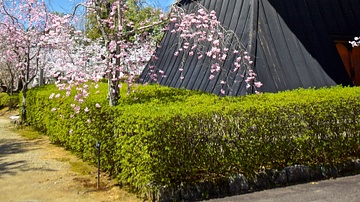
Ninna-ji
Ninnia-ji is a Shingon Buddhist temple complex located in Kyoto, Japan. Known as the 'Temple of Heavenly Benevolence', it was founded in 888 CE by Emperor Uda (r. 887-897 CE). Ninna-ji is listed by UNESCO as a World Heritage Site and...

Definition
Oda Nobunaga
Oda Nobunaga was the foremost military leader of Japan from 1568 to 1582. Nobunaga, along with his two immediate successors, Toyotomi Hideyoshi (1537-1598) and Tokugawa Ieyasu (1543-1616), is credited with unifying medieval Japan...
Definition
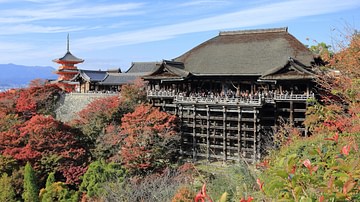
Kiyomizu-dera
Kiyomizu-dera, otherwise known as the 'Temple of the Pure Water Spring', is a Buddhist temple in Kyoto, Japan. The site is famous for its impressive viewing platform, three-storey Koyasu pagoda and the medicinal pure waters of the...

Definition
White Huns (Hephthalites)
The White Huns were a race of largely nomadic peoples who were a part of the Hunnic tribes of Central Asia. They ruled over an expansive area stretching from the Central Asian lands all the way to the Western Indian Subcontinent...

Definition
Hongwu Emperor
The Hongwu Emperor (r. 1368-1398 CE) was the founder of the Ming dynasty (1368-1644 CE) which took over from the Mongol Yuan dynasty (1276-1368 CE) as the rulers of China. Born a peasant with the name Zhu Yuanzhang, the future...

Definition
Shishunaga Dynasty
The Shishunaga Dynasty (also Sishunaga/Shaishunaga Dynasty) ruled the Magadha Kingdom in ancient India from c. 413 BCE to c. 345 BCE (in some sources from 421 BCE). It is said to be the third imperial dynasty of Magadha after...
