
Search
Remove Ads
Advertisement
Search Results
Definition
Nitocris
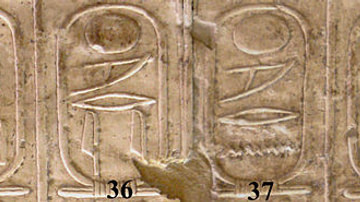
Nitocris (2184-2181 BCE) is the Greek name for Nitiqret, the last monarch of the 6th Dynasty of Egypt which concluded the period of the Old Kingdom (c. 2613-2181 BCE). Nitocris is best known from the story told of her by Herodotus (484-425/413...

Article
Achaemenid Kings List & Commentary
The Achaemenid Empire (c. 550-330 BCE) was the first great Persian political entity in Western and Central Asia which stretched, at its peak, from Asia Minor to the Indus Valley and Mesopotamia through Egypt. It...

Article
Ten Ancient Egypt Facts You Need to Know - Fun Trivia About Ancient Egypt
Ancient Egypt is defined as the civilization that flourished in North Africa between circa 6000 and 30 BCE – from the Predynastic Period in Egypt (circa 6000 to circa 3150 BCE) through...

Article
Medicine in Ancient Mesopotamia - A Gift of the Gods to Their People
In ancient Mesopotamia, the gods informed every aspect of daily life, including the practice of medicine. Gula, the Sumerian goddess of healing, presided over the medical arts, guiding...

Lesson Pack
Mesopotamia: Government & Religion
This lesson pack on government and religion in ancient Mesopotamia includes the following content: Three Lesson Plans - Rise of City States - Temples & Divine Kingship - Code of Hammurabi Additional Materials...

Image
Roman Abacus
A 1st century CE bronze portable abacus, part of a Roman scribe's kit. From St. Martin-de-Corléans Cemetery, Aosta, North Italy. (Archaeological Museum, Aosta)
Collection
The Legacy of the Ancient Greeks
The ancient Greeks left the world such an impressive legacy of ideas that many of them were seen for centuries in the civilizations that followed and, even today, cultures around the world continue to display many...
Image
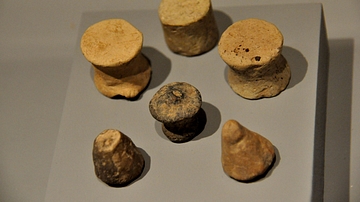
Clay Tokens for Counting
These clay tokens represent the first form of counting, before the invention of writing. They date back to the Neolithic period, 8000-7000 BCE and were found in Tapa Raza, south-east of modern Sulaimaniya Governorate, Iraq...
Article
Ancient Mesopotamian Ghost Spell - Keeping the Dead Where They Belong
Medicine in ancient Mesopotamia was based on the belief that illness was caused by supernatural agencies and, although medicines were given and injuries treated, magical spells and incantations...

Article
Third Gender Figures in the Ancient Near East
In the ancient Near East, there was a social standard by which men were ideally expected to behave. In the 21st century CE, expectations still exist, albeit in different forms. Normative masculinity through...
