
Search
Did you mean: Hathor?
Remove Ads
Advertisement
Search Results

Article
The Printing Revolution in Renaissance Europe
The arrival in Europe of the printing press with moveable metal type in the 1450s CE was an event which had enormous and long-lasting consequences. The German printer Johannes Gutenberg (c. 1398-1468 CE...

Article
How Christmas Was Shaped by 19th-Century Literature
How we celebrate Christmas today is largely shaped by a small group of authors who recorded festive traditions in the 19th century. These authors include Washington Irving (1783-1859), Clement Clarke...

Article
Protagoras of Abdera: Of All Things Man Is The Measure
Protagoras of Abdera (l.c. 485-415 BCE) is most famous for his claim that "Of all things the measure is Man, of the things that are, that they are, and of the things that are not, that they are not"...

Article
Eastman's Account and Media Coverage of the Wounded Knee Massacre
Of the many first-person accounts of the aftermath of the Wounded Knee Massacre, the report by Sioux author and physician Charles A. Eastman (also known as Ohiyesa, l. 1858-1939) is among...

Article
12 Best Historical Fiction Books to Read
The AHE team live and breathe history, but we all have our favourite historical periods and authors. We thought it would be fun for each of us to nominate one or two books that we would recommend for the general...

Article
Inanna and Ebih - A Poetic Narrative on Feminine Power
Inanna and Ebih is a Sumerian/Akkadian poem attributed to Enheduanna (circa 2300 BCE), daughter of Sargon of Akkad. The work's original title is Inninmehusa ("Goddess of the Fearsome Powers") and...

Article
Female Gladiators In Ancient Rome
Female gladiators in ancient Rome – referred to by modern-day scholars as gladiatrix – may have been uncommon but they did exist. Evidence suggests that a number of women participated in the public games of Rome...
Article
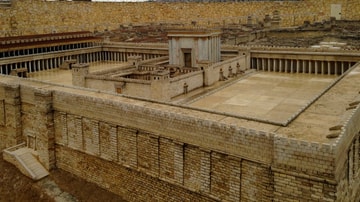
Early Judaism
During the period of early Judaism (6th century BCE - 70 CE), Judean religion began to develop ideas which diverged significantly from 10th-to-7th-centuries BCE Israelite and Judean religion. In particular, this period marks a significant...

Article
Ten Ancient Mesopotamia Facts You Need to Know - Fun Facts on the Cradle of Civilization
Mesopotamia is the ancient Greek name (meaning "the land between two rivers," the Tigris and Euphrates) for the region corresponding to modern-day Iraq and parts of Iran...

Interview
Interview with Greg Woolf
Join World History Encyclopedia as they talk to author and professor Greg Woolf all about his book Rome: An Empire's Story, Second Edition, published by Oxford University Press. Kelly (WHE): Do you want to just tell everyone...
