
Search
Remove Ads
Advertisement
Search Results

Image
Map of the Akkadian Empire at Its Height, c. 2250 BCE - Sargon, Naram-Sin, and the Rise of Mesopotamian Empire
The Akkadian Empire (c. 2334–2154 BCE) is widely regarded as one of the earliest territorial empires in recorded history. Founded by Sargon of Akkad (reign...

Image
Map of the Empire of the Huns under Attila, c. 450 CE - Power, Pressure, and Collapse in Late Antiquity
The rise of the Huns in the 5th century CE reshaped the political landscape of Late Antiquity, culminating under Attila the Hun (reign 434-453 CE). Emerging...

Definition
Greek Archaic Period
The Greek Archaic Period (c. 800-479 BCE) started from what can only be termed uncertainty, and ended with the Persians being ejected from Greece for good after the battles of Plataea and Mykale in 479 BCE. The Archaic Period...

Definition
Battle of Chaeronea
The Battle of Chaeronea took place in 338 BCE on an early August morning outside the town of Chaeronea. Although for centuries the cities of Athens and Sparta dominated Greece, politically, militarily and economically, the...

Definition
Sacred Band of Thebes
The Sacred Band of Thebes was an elite unit of the Theban army comprised of 150 gay male couples totaling 300 men. They were formed under the leadership of Gorgidas but first achieved fame under the general Pelopidas. They...

Definition
Assur - The Supreme God of the Ancient Assyrians
Assur (also Ashur, Anshar) is the god of the ancient Assyrians who was elevated from a local deity of the city of Ashur to the supreme god of the Assyrian pantheon. His attributes were drawn from earlier...
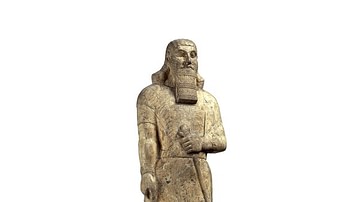
Definition
Ashurnasirpal II
Ashurnasirpal II (r. 884-859 BCE) was the third king of the Neo-Assyrian Empire. His father was Tukulti-Ninurta II (r. 891-884 BCE) whose military campaigns throughout the region provided his son with a sizeable empire and the...

Definition
Cilicia Campestris
Cilicia Campestris was one of the six districts of the Roman province of Cilicia organized by Pompey the Great (l. c. 106-48 BCE) in 64 BCE. The name translates roughly into “Cilicia of the Plains” and corresponds to the earlier...

Definition
Ögedei Khan
Ogedei Khan (aka Ogodei) ruled the Mongol Empire from 1229 to 1241. He was the third son of Genghis Khan (r. 1206-1227), the empire's founder. Ogedei's accomplishments included creating a new capital at Karakorum, establishing a system...

Image
The Baths of the Roman Empire - The Architecture of Daily Life
Public bathhouses (balnea and large imperial thermae) were a defining feature of urban life across the Roman Empire (27 BCE–476 CE in the West). Building on earlier bathing traditions in the...
