
Search
Remove Ads
Advertisement
Search Results

Collection
Ancient Egypt: Government & Religion
Government and religion in ancient Egypt were fully integrated beginning with the First Dynasty of Egypt (c. 3150 to c. 2890 BCE). The king was understood as a representative of a god, the specific deity sometimes...
Definition
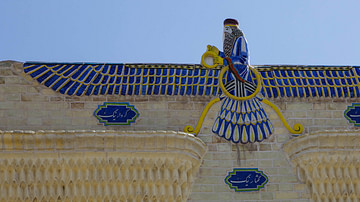
Zarathustra
Zarathustra (also given as Zoroaster, Zartosht, Zarathustra Spitama, l. c. 1500-1000 BCE) was the Persian priest-turned-prophet who founded the religion of Zoroastrianism (also given as Mazdayasna “devotion to Mazda”), the first monotheistic...

Definition
Mesopotamian Literature - The Earliest Works of the Imagination
Ancient Mesopotamian literature developed circa 2600 BCE after scribes, who had formerly been record-keepers, began composing original works in the region of Sumer. The Sumerians invented writing...
Definition
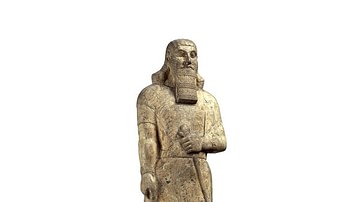
Ashurnasirpal II
Ashurnasirpal II (r. 884-859 BCE) was the third king of the Neo-Assyrian Empire. His father was Tukulti-Ninurta II (r. 891-884 BCE) whose military campaigns throughout the region provided his son with a sizeable empire and the...

Image
Assyrian Soldiers Engaging with Nubian Soldiers at Memphis
Detail of a large gypsum wall panel showing the Assyrian army attacking the Egyptian city of Memphis and commemorating the final victory of the Assyrian king Ashurbanipal II over the Egyptian...

Definition
Ancient Syria
Syria is a country located in the Middle East on the shore of the Mediterranean Sea and bordered, from the north down to the west, by Turkey, Iraq, Jordan, Israel, and Lebanon. It is one of the oldest inhabited regions in the world...

Article
History of Assyria
The foundation of the Assyrian dynasty can be traced to Zulilu, who is said to have lived after Bel-kap-kapu (c. 1900 BCE), the ancestor of Shalmaneser I. The city-state of Ashur rose to prominence in northern Mesopotamia, founding...

Definition
Mesopotamian Government - Helping and Serving the Gods
Ancient Mesopotamian government was based on the understanding that human beings were created to help and serve the gods. The high priest, king, assembly of elders, governors, and any other officials...
Image
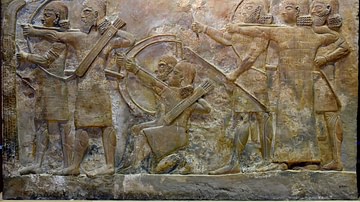
Assyrian Archers from Khorsabad
Assyrian relief depicting a group of Assyrian archers attacking an enemy (not shown here), from the Royal Palace of Sargon II at Khorsabad, in modern-day Nineveh Governorate, Iraq, c. 710 BCE. A soldier holding a...

Image
Assyrian Soldiers Holding Decapitated Heads of Nubian Soldiers
Detail of a large gypsum wall panel, depicting the Assyrian attack on a fortress at the Egyptian city of Memphis in 667 BCE, Panel 17, Room M of the North Palace at Nineveh, Northern Mesopotamia...
