
Search
Remove Ads
Advertisement
Search Results
Image
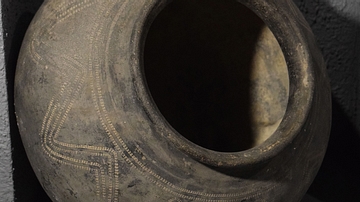
Armenian Patterned Clay Vessel
This ancient clay vessel was made in what is present-day Armenia. It dates from the 18th-16th century BCE. (Metsamor Historical-Archaeological Museum-Reserve, Taronik, Armenia)

Image
Medieval Armenian Architectural Element
This stone block contains a stylized design dating back to 13th or 14th-century Armenia. It is located within the Noravank Monastery, which is located in Armenia's Vayots Dzor Province.
Image
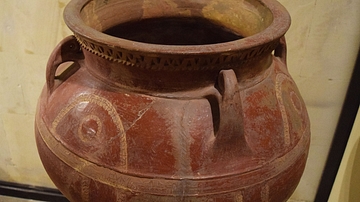
Armenian-Byzantine Vessel
This elegant clay patterned vessel dates from the 10-11th century CE when what's present-day Armenia was under strong Byzantine political and cultural influence. (Metsamor Historical-Archaeological Museum-Reserve, Taronik...

Image
Fragments of Armenian Plates
These clay fragments are decorated with glaze and date from the 13th century BCE. They were excavated in what is present-day Armenia. (Metsamor Historical-Archaeological Museum-Reserve, Taronik, Armenia)

Image
Entrance to the Armenian Khor Virap Monastery
Entrance to the Khor Virap Monastery, which is located near the border with Turkey some 8 km (5 mi) from the town of Artashat, Armenia. It is one of the most visited and sacred sites in Armenia.

Image
Armenian Stone Weapons Mould
Ancient stone mold, used for making weapons in ancient times in what is present-day Armenia, dating from the 12th-10th century BCE.
Metsamor Historical-Archaeological Museum-Reserve, Taronik.

Image
Armenian Gravestones at Zorats Church
Surrounding the Zorats Church in what's present-day Armenia are a number of exquisitely carved khachkars dating to the 10th-13th centuries CE and tombstones dating from the 15-17th centuries CE.
Image
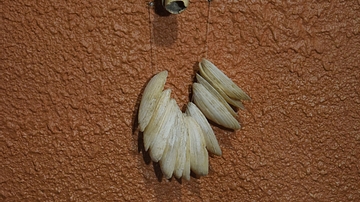
Ancient Armenian Seashells
These ancient seashells came to what is present-day Armenia from the Persian Gulf and the Mediterranean Sea via trade. They date from the 15th-13th century BCE and attest to the region's importance as a crossroads of trade...

Definition
Cilicia Campestris
Cilicia Campestris was one of the six districts of the Roman province of Cilicia organized by Pompey the Great (l. c. 106-48 BCE) in 64 BCE. The name translates roughly into “Cilicia of the Plains” and corresponds to the earlier...

Video
Lords of the Mountains: The Foundation of the Armenian Kingdom of Cilicia
For nearly three centuries between 1080 and 1375 a kingdom of exiles from the Armenian Plateau survived in the Taurus Mountains of modern day south-central Turkey. This is the story...
