
Search
Remove Ads
Advertisement
Search Results

Definition
Nikephoros I
Nikephoros I ruled as emperor of the Byzantine Empire from 802 to 811 CE. A former finance minister who did much to improve the state economy, Nikephoros was not particularly popular with the empire's overtaxed peasants and overregulated...

Definition
Michael II
Michael II the Amorion, also known as Michael “the Stammerer”, was emperor of the Byzantine Empire between 820 and 829 CE. He founded the short-lived Amorion dynasty, named after his hometown in Phrygia, which would last until 867...

Interview
Interview: Queens of Jerusalem, the Women Who Dared to Rule by Katherine Pangonis
Join World History Encyclopedia as they chat with medievalist Katherine Pangonis, all about her new book Queens of Jerusalem, the Women Who Dared to Rule. Kelly: Do you want...

Article
Trail of Tears: Memorial and Protest of the Cherokee Nation by John Ross
The Trail of Tears was the forced relocation of the "Five Civilized Tribes" – Cherokee, Chickasaw, Choctaw, Muscogee Creek, and Seminole – from their ancestral lands in the Southeastern...

Definition
Jerusalem
Jerusalem is a major holy city for the three Western traditions of Judaism, Christianity, and Islam. It sits on spurs of bedrock between the Mediterranean Sea and the Dead Sea area. To the north and west, it tapers off to the Jezreel...

Definition
Tushpa
Tushpa, later known as Van, was the capital of the Urartu kingdom of ancient Armenia, eastern Turkey, and western Iran from the 9th to 6th century BCE. Located on the eastern shore of Lake Van in modern Turkey, the city was a fortress...

Definition
Nikephoros II Phokas
Nikephoros II Phokas was Byzantine emperor from 963 to 969 CE. Known as “White Death of the Saracens,” Nikephoros was a fearsome commander who conquered Crete, Cilicia, and much of Syria. While he is known as a great military...
Definition
Romanos I
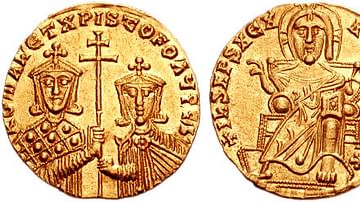
Romanos I Lekapenos (“the Ignorant”) was emperor of the Byzantine Empire from 920 to 944 CE. Of Armenian descent, he was a military commander who usurped the throne to rule as co-emperor with the rightful heir, but still minor, Constantine...

Definition
Byzantine Empire
The Byzantine Empire existed from 330 to 1453. It is often called the Eastern Roman Empire or simply Byzantium. The Byzantine capital was founded at Constantinople by Constantine I (r. 306-337). The Byzantine Empire varied in...

Definition
Mythology
Myths are a part of every culture in the world and are used to explain natural phenomena, where a people came from and how their civilization developed, and why things happen as they do. At their most basic level, myths comfort by...
