
Search
Remove Ads
Advertisement
Search Results

Image
Armenian Inscription in Surb Karapet Church
This decorative inscription in medieval Armenian can be found inside the Surb Karapet Church, which forms part of Armenia's celebrated Noravank Monastery.
Image
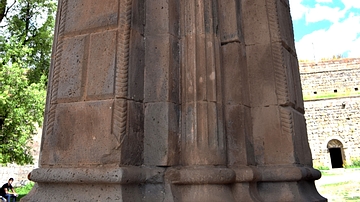
Armenian Column outside Church of St. Pogos and Petros
This is an Armenian column outside the Church of St. Pogos and Petros at Tatev Monastery in Armenia. This church was originally built c. 895-906 CE.

Image
Statuette of a Boy in Armenian dress
This bronze statuette was part of a matching pair of statuettes found in the region of Alexandria, Egypt and dates to the mid-late 1st Century BCE. The statuette portrays a boy in Eastern garb, possibly a prince...

Image
Prehistoric Armenian Ritual Ware
This elegant ritual ware vessel is made of clay and dates from the 12th-9th century BCE. It was excavated in what is present-day Armenia. (Metsamor Historical-Archaeological Museum-Reserve, Taronik, Armenia)

Image
Armenian Marzpanate
A map showing the territory of Persian Armenia, the Marzpanate, 387-591 CE.

Image
Armenian Jewish Tombstones in Yeghegis
Nearly 40 tombstones from the 13th and 14th century CE survive in the Jewish cemetery, and another 30 are located nearby in Yeghegis, Armenia. The oldest tombstone dates to 1266 CE and the latest to 1337 CE...

Image
Old Armenian Church at Derbent
Derbent is renown for its citadel (“Naryn-Kala” or “Dagh Bary” in Persian) and its imposing walls that date from the 6th century CE. Derbent prospered for over 1,500 years under Persian, Arab, Turkish, Azeri, Mongol...
Image
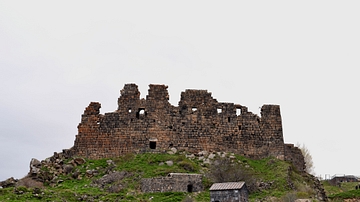
View of the Armenian Fortress Amberd
Before Amberd Fortress was constructed in the 7th century CE, Stone Age peoples, the Urartians, and even the Romans used and understood the location's strategic advantages, lying at the intersection of the Amberd...
Image
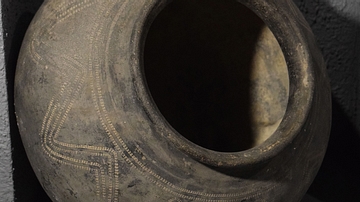
Armenian Patterned Clay Vessel
This ancient clay vessel was made in what is present-day Armenia. It dates from the 18th-16th century BCE. (Metsamor Historical-Archaeological Museum-Reserve, Taronik, Armenia)

Image
Fragments of Armenian Plates
These clay fragments are decorated with glaze and date from the 13th century BCE. They were excavated in what is present-day Armenia. (Metsamor Historical-Archaeological Museum-Reserve, Taronik, Armenia)
