
Search
Did you mean: Kali?
Remove Ads
Advertisement
Search Results

Definition
Abu Bakr
Abu Bakr (l. 573-634 CE, r. 632-634 CE) was an early convert of Islam; he was a close friend and confidant of the Islamic Prophet Muhammad, and became the first caliph of the Islamic empire – a successor to Muhammad's temporal position...

Definition
Indian Princely States
The Indian Princely states (aka Native States or Princely India) were those states in the Indian subcontinent the British did not conquer but which were typically bound by treaty first to the East India Company and then to...

Definition
Anahita
Anahita is the ancient Persian goddess of fertility, water, health and healing, and wisdom. Owing to her association with life-giving properties, she also came to be connected with ancient Persian warfare as soldiers would pray to her...

Definition
Umar
Umar ibn al-Khattab (r. 634-644 CE) was the second caliph of the Rashidun Caliphate (632-661 CE, as the first four caliphs are referred to by the Sunni Muslims). He was an early convert of Islam and one of the close companions of the Islamic...

Definition
Anglo-Maratha Wars
The three Anglo-Maratha Wars (1775-1819) were fought between the Maratha Confederacy of India (aka the Mahrattas, 1674-1818) and the British East India Company (EIC). The Maratha Hindu princes were rarely unified, and so the...
Definition
Ridda Wars
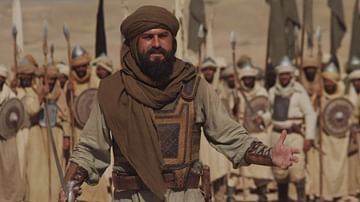
The Ridda Wars or the Wars of Apostasy (632-633 CE) were a series of military engagements between the armies of the Rashidun Caliphate (632-661 CE) and the renegade tribes of Arabia. The rebels had renounced their allegiance with...

Definition
Kalash Culture
The Kalash people, also called Kafir (Non-believer), Black Robe and Siah Posh, live in the three sub-valleys of Kalash; Bumboret, Rumbor and Birir, in the modern-day District Chitral, Pakistan. The Kalasha are ancient tribe of...

Article
The Spread of Islam in Ancient Africa
Following the conquest of North Africa by Muslim Arabs in the 7th century CE, Islam spread throughout West Africa via merchants, traders, scholars, and missionaries, that is largely through peaceful means whereby...

Article
Early Muslim Conquests (622-656 CE)
Islam arose as a religious and socio-political force in Arabia in the 7th century CE (610 CE onwards). The Islamic Prophet Muhammad (l. 570-632 CE), despite facing resistance and persecution, amassed a huge following...
Article
Never Seen: The Trace of a Jewish Spirit from Mesopotamia
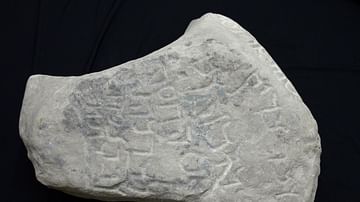
The Story Begins from a Dead End August 25, 2015 was a very hot day of summer but its omen was a very promising one! That day, I was with my friend, Mr. Hashim Hama Abdulla, director of the...
