
Search
Remove Ads
Advertisement
Search Results

Definition
Gaya
Gaya (aka Kaya or Karak) was a confederation which ruled central-southern Korea during the Three Kingdoms period from the 1st to 6th century CE. The peninsula was dominated by Gaya's more powerful neighbouring kingdoms of Goguryeo (Koguryo...

Definition
Taejo of Goryeo
Taejo (r. 918-943 CE), previously known as Wang Geon or Wang Kon, was the founder and first king of the Goryeo (Koryo) kingdom which unified and ruled ancient Korea from 918 CE to 1392 CE. Wang Geon was given the posthumous title...
Definition
Persephone
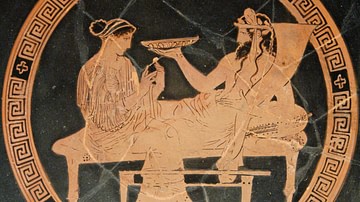
Persephone (aka Kore) was the Greek goddess of agriculture and vegetation, especially grain, and the wife of Hades, the ruler of the Underworld. Persephone was an important element of the Eleusinian Mysteries and the Thesmophoria...

Definition
Tlahuizcalpantecuhtli
Tlahuizcalpantecuhtli, 'Dawn Lord,' was a Mesoamerican god who represented a menacing aspect of Venus, the morning star, and was one of the four gods which held up the sky. The people of the ancient Americas believed his rays...
Definition
Swahili Coast
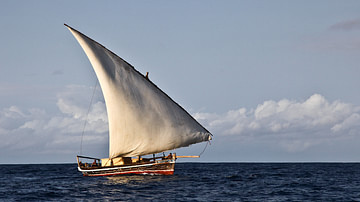
The Swahili Coast on the shores of East Africa was a region where Africans and Arabs mixed to create a unique identity from the 8th century called Swahili Culture. Swahili is the name of their language and means 'people of the coast.'...

Definition
Tiamat - The Great Mesopotamian Goddess of Chaos
Tiamat is the Mesopotamian goddess associated with primordial chaos and the salt sea, best known from the Babylonian epic Enuma Elish. In all versions of the myth, following the original, Tiamat always...

Definition
William Bradford
William Bradford (l. 1590-1657 CE) was one of the leading members of the congregation of pilgrims who came to North America aboard the Mayflower, a signer of the Mayflower Compact, and the second governor of the Plymouth Colony...

Definition
Chitrali Mythology
Chitrali mythology developed in the region of Chitral, the tallest portions of the Hindu Kush mountains, where the Chitrali people, at the juncture of South, Central, West, and East Asia, were exposed to many external cultural...

Definition
Isabella d'Este
Isabella d’Este (l. 1474-1539), was the leading lady of Renaissance Italy who funded the works of such renowned artists as Leonardo da Vinci and Michelangelo. Many of the greatest Renaissance artworks would not exist today if...

Definition
Indus Valley Civilization
The Indus Valley Civilization was a cultural and political entity which flourished in the northern region of the Indian subcontinent between c. 7000 - c. 600 BCE. Its modern name derives from its location in the valley...
