
Search
Remove Ads
Advertisement
Search Results

Definition
Antikythera Mechanism
The Antikythera mechanism (also known as the Antikythera Device), dated to the late 2nd century/early 1st century BCE (roughly 205-60 BCE) is understood as the world's first analog computer, created to accurately calculate...

Definition
Germ Theory
The germ theory, which emerged in the late 19th century, demonstrated that microscopic germs caused most human infectious diseases. The germs involved included bacteria, viruses, fungi, protozoa, and prions. Louis Pasteur (1822-1895...

Definition
Barnhouse Settlement
The Barnhouse Settlement is a Neolithic village located in Antaness, Orkney, Scotland, which was inhabited between c. 3300 and 2600 BCE. The present designation of 'Barnhouse' comes from the name of the farmland on which the...
Article
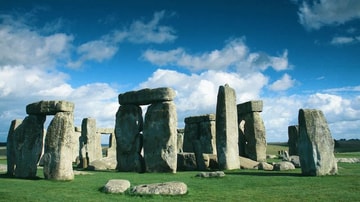
The Stonehenge Burials
A great deal has been written about why the prehistoric monument of Stonehenge, in Wiltshire, southern England, was constructed. Perhaps it was designed as a temple to the ancestors, an astronomical calendar, a healing centre...

Image
Twelve Spices That Changed the World - Trade, Empire, and the Global Age of Spices, 1450–1650
Between c. 1450 and 1650, demand for spices and other high-value plant commodities became an important catalyst for European maritime expansion. Pepper, cinnamon, cloves...

Definition
Antonie van Leeuwenhoek
Antonie van Leeuwenhoek (1632-1723) was the most important microscopist of the Scientific Revolution. The Dutchman made over 500 microscopes, many with a magnification far superior to contemporary models. His discoveries...

Definition
Chauvet Cave
The Chauvet Cave (also known as the Chauvet-Pont-d'Arc Cave) is a Palaeolithic cave situated near Vallon-Pont-d'Arc in the Ardèche region of southern France that houses impeccably preserved, exquisite examples of prehistoric art...

Definition
Homo Rudolfensis
Homo rudolfensis is an early human species that lived in East Africa between c. 2.5 and 1.8 million years ago. It is known from a handful of skull, jaw and teeth fragments that remind alternatingly of Homo or of Australopithecus...

Definition
Cyclades
The Cyclades are a group of islands in the southern Aegean situated between the Greek mainland and Turkey. The name was coined in the Archaic period as the islands form an approximate circle (kyklos) around the central and most sacred...

Definition
Ancient Scotland
Scotland is a country which, today, comprises the northern part of Great Britain and includes the islands known as the Hebrides and the Orkneys. The name derives from the Roman word "Scotti" which designated an Irish tribe who...
