
Search
Remove Ads
Advertisement
Search Results

Definition
Ancient Greek Science
Ancient Greek science is a modern term for the application of systematic inquiry into the individual, the world, and the universe, which began in Ionia in the 6th century BCE with Thales of Miletus (l. c. 585 BCE) and continued...

Definition
The Goths
The Goths were a Germanic tribe who are frequently referenced for their part in the fall of the Roman Empire and their subsequent rise to power in the region of northern Europe, initially in Italy. Prior to their contact with Rome...

Definition
Tale of Genji
The 'Tale of the Genji' or Genji Monogatari, written in the 11th century CE by Murasaki Shikibu, a court lady, is Japan's oldest novel and possibly the first novel in world literature. The classic of Japanese literature, the work...
Definition
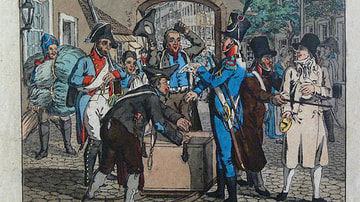
Continental System
The Continental System was a major blockade of British trade imposed by French Emperor Napoleon I from 21 November 1806 to 11 April 1814. It was designed to cripple the British economy, thereby forcing Britain out of the Napoleonic...

Video
The Story of Tutankhamun with Garry Shaw
Join World History Encyclopedia as they sit down with author and Egyptologist Garry Shaw to hear all about his new book The Story of Tutankhamun: An Intimate Life of the Boy who Became King The discovery...

Image
Ancient Mesopotamia from Cities to Empires
The long-term development of Mesopotamia traces one of the earliest and most influential trajectories in world history, spanning from small Stone Age settlements (c. 10,000 BCE) to the political and cultural...

Image
Map of the Hittite Empire 16th-13th Century BCE - Anatolian Great Power of the Bronze Age
The Hittite Empire emerged in central Anatolia during the early second millennium BCE and developed into one of the major powers of the Late Bronze Age. Centered on Hattusa...

Article
Child Labour in the British Industrial Revolution
Children were widely used as labour in factories, mines, and agriculture during the British Industrial Revolution (1760-1840). Very often working the same 12-hour shifts that adults did, children as...

Article
Ten Ancient Mesopotamia Facts You Need to Know - Fun Facts on the Cradle of Civilization
Mesopotamia is the ancient Greek name (meaning "the land between two rivers," the Tigris and Euphrates) for the region corresponding to modern-day Iraq and parts of Iran...

Article
Twelve Great Viking Leaders
The Viking Age (c. 790-1100 CE) transformed every aspect of the cultures the Norse came in contact with. The Vikings usually struck without warning and, in the early years, left with their plunder and slaves to be sold...
