
Search
Remove Ads
Advertisement
Search Results

Definition
Karakorum - Capital of the Mongol Empire
Karakorum (aka Qaraqorum, modern name: Harhorin) is located in the Orkhon Valley of central Mongolia and was the capital of the Mongol Empire from 1235 to 1263. Ogedei Khan (r. 1229-1241) ordered its construction, and had a walled palace...

Article
Religion in the Mongol Empire
The Mongol Empire (1206-1368 CE) covered Asia from the Black Sea to the Korean peninsula and so naturally included all manner of religions within its borders, but the Mongols themselves had their own particular religious beliefs and rituals...

Article
Food & Drink in the Mongol Empire
The diet of the Mongols was greatly influenced by their nomadic way of life with dairy products and meat from their herds of sheep, goats, oxen, camels, and yaks dominating. Fruit, vegetables, herbs, and wild game were added thanks to foraging...

Article
Women in the Mongol Empire
Women in the Mongol Empire (1206-1368 CE) shared the daily chores and hardships of steppe life with men and were largely responsible for tending animals, setting up camps, childrearing, producing food and cooking it. Having rather more rights...

Definition
Ögedei Khan
Ogedei Khan (aka Ogodei) ruled the Mongol Empire from 1229 to 1241. He was the third son of Genghis Khan (r. 1206-1227), the empire's founder. Ogedei's accomplishments included creating a new capital at Karakorum, establishing a system of...

Article
The Spice Trade & the Age of Exploration
One of the major motivating factors in the European Age of Exploration was the search for direct access to the highly lucrative Eastern spice trade. In the 15th century, spices came to Europe via the Middle East land and sea routes, and spices...

Definition
Batu Khan
Batu Khan (l. 1205-1255 CE) was a grandson of Genghis Khan and the founder of the Golden Horde. Batu was a skilled Mongol military commander and won battles from China to Persia, although his most famous exploits involve the grand Mongol...
Definition
The Assassins
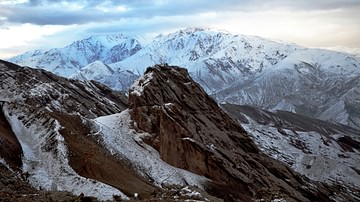
The Assassins (aka Nizari Ismailis), were a heretical group of Shiite Muslims who were powerful in Persia and Syria from the 11th century CE until their defeat at the hands of the Mongols in the mid-13th century CE. Secure in their fortified...

Article
Battle of Rivoli
The Battle of Rivoli (14-15 January 1797) was the climactic battle of Napoleon's Italian Campaign of 1796-97. A fourth and final attempt by the Austrian army to relieve the siege of Mantua was thwarted by Napoleon Bonaparte's Army of Italy...

Image
Map of the Mongol Empire
A map of the Mongol Empire at its greatest extent, showing capitals and major cities.
