AP World History Unit 7

Global Conflict (c. 1900 to the Present)
Jan van der Crabben
by
published on
bookmark_addbookmark_addedSave Curriculum Collection

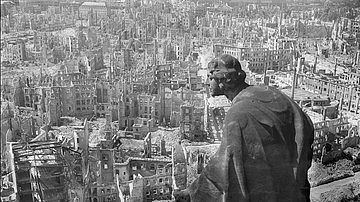
At the dawn of the 20th century, a few Western powers dominated global politics. Within only 50 years, that order was remade by two world wars of unprecedented scale. Industrial technology that had built railways and factories now produced machine guns, poison gas, warplanes, and finally the atomic bomb, while governments mobilised whole populations through propaganda and intensified nationalism – both at home and across their colonies. The land empires of the Ottomans, Russia, and the Qing dynasty collapsed. Revolution brought communism to power in Russia, and the unresolved settlement after the First World War helped bring fascist and totalitarian regimes to power, causing the Second World War. It was in this period that states turned the machinery of the modern world against civilian populations, from the Armenian genocide to the Holocaust.

This collection collates articles, definitions, and maps covering Unit 7: Global Conflict of the AP® World History: Modern curriculum, which accounts for 8–10% of the exam and around 9–12 class periods. It offers an overview for teachers and students alike, providing the materials needed to explore how industrial power, ideology, and empire combined to produce conflict on a global scale.

Unit 7 covers nine topics: 7.1 Shifting Power After 1900 · 7.2 Causes of World War I · 7.3 Conducting World War I · 7.4 Economy in the Interwar Period · 7.5 Unresolved Tensions After World War I · 7.6 Causes of World War II · 7.7 Conducting World War II · 7.8 Mass Atrocities After 1900 · 7.9 Causation in Global Conflict

Our encyclopedia's current coverage is strongest on the two world wars and the Russian Revolution. We are still expanding our articles on the Chinese and Mexican revolutions, the economics of the interwar years, and mass atrocities beyond the Holocaust.

⬇️ Scroll down to see the collection!

Ideas for Teachers

  • Alliances turn to war: Have students read The Pre-WWI Alliance System and Assassination of Archduke Franz Ferdinand articles, alongside the Map of Europe on the Eve of World War I. Then ask them to explain how the assassination of one man in Sarajevo drew in powers with no direct stake in the quarrel.
  • Evidence in an eyewitness account: Assign Eyewitness Accounts of WWI and have students identify what each account offers as evidence, and what it cannot tell us. Split your students into groups to discuss why soldiers' testimony and official dispatches frequently describe the same battle differently.
  • Industrial weapons of destruction: Using The Terrors of Poison Gas in WWI and Trench Warfare on WWI's Western Front articles, alongside the Map of the Western Front in World War I, 1914-18, have students determine why and how new technologies produced stalemate rather than swift victory. Connect that stalemate to the casualty figures.
  • Total war: Have students read The Home Fronts in World War I and Women in World War I articles. Then examine the Map of Africa in World War II. Finally, ask them to describe what "total war" demanded of people who never went to the frontline.
  • (Un)sustainable peace: Working from the Treaty of Versailles, Paris Peace Conference, and League of Nations articles, ask your students to list the problems the 1919 settlement left unresolved. Then compare their list with the argument made in The Causes of WWII.
  • Weighing a decision: Put the articles Why Were Hiroshima & Nagasaki Bombed in WWII? and The Bombing of Dresden in 1945 side by side. Ask students to identify the respective justifications offered at the time. Then have them assess to what extent the evidence in each article supports or undermines these justifications.
  • Understanding the Holocaust: Ask your students to read the Eyewitness Accounts of the Holocaust article, with the Map of the Holocaust in Europe. Then have them explain how the rise of the regime described in our Causes of World War II article made the genocide possible.

Browse the collection below to find materials that fit your teaching style, and feel free to adapt them to your students. Note that our articles are print-friendly, and there is a PDF export button on each article page.

AP® and Advanced Placement® are trademarks registered by the College Board, which is not affiliated with, and does not endorse, this collection.

Articles & Definitions

The Causes of WWI
Article

The Causes of WWI

The origins of the First World War (1914-18) are many and varied, with some even dating back several decades, but a political...
Causes of the Russian Revolution of 1917
Article

Causes of the Russian Revolution of 1917

There were many causes behind the Russian Revolution of 1917, ranging from the unpopular authoritarian rule...
Bolshevik Revolution
Definition

Bolshevik Revolution - When Russia Became a Socialist State in 1917

The Bolshevik Revolution occurred on 7 November 1917 (old calendar 25 October) and established...
The Pre-WWI Alliance System
Article

The Pre-WWI Alliance System - Triple Entente v. Triple Alliance

The alliance system in Europe was one of the causes of the First World War (1914-18), although...
Assassination of Archduke Franz Ferdinand
Article

Assassination of Archduke Franz Ferdinand - The Road to WWI

The assassination of Archduke Franz Ferdinand (1863-1914) in the Balkans in the summer of 1914...
Trench Warfare on WWI's Western Front
Article

Trench Warfare on WWI's Western Front

The trench warfare of the Western Front during the First World War (1914-18) involved soldiers living and dying...
The Terrors of Poison Gas in WWI
Article

The Terrors of Poison Gas in WWI

Already subjected to constant bombardment by artillery, enemy sniper fire, and the awful living conditions, soldiers...
The Home Fronts in World War I
Article

The Home Fronts in World War I - The Effects of Total War on Civilians

The First World War (1914-18) saw fighting on an unprecedented scale but also involved...
Women in World War I
Article

Women in World War I - Changing Roles & Rights

During the First World War (1914-18), as governments sought to field the largest armies possible and so...
Eyewitness Accounts of WWI
Article

Eyewitness Accounts of WWI

The First World War (1914-18) was the first truly global conflict and the first to be fully mechanised. Armies clashed...
Paris Peace Conference
Definition

Paris Peace Conference - How WWI's Victors Reshaped the World

The Paris Peace Conference, held from January 1919 to January 1920 and attended by the victorious...
Treaty of Versailles
Definition

Treaty of Versailles

The Treaty of Versailles, signed in June 1919, was an agreement between the victors of the First World War (1914-18) which...
League of Nations
Definition

League of Nations

The League of Nations was founded in January 1920 to promote world peace and welfare. Created by the Treaty of Versailles, which...
Lenin's New Economic Policy
Article

Lenin's New Economic Policy - Communism's Flirtation with Capitalism

The New Economic Policy (NEP) of Vladimir Lenin (1870-1924), leader of Soviet Russia...
Stalin's Five-Year Plans
Article

Stalin's Five-Year Plans - Collectivising Agriculture & Industrialising the USSR

Joseph Stalin's five-year plans (1928-50) were a series of state-led initiatives...
Stalin's Gulag System
Article

Stalin's Gulag System - The USSR's Labour Camps

Joseph Stalin's gulag system was a network of labour camps across the USSR, which were, from 1930, used...
The USSR's Great Famine of 1932-3
Article

The USSR's Great Famine of 1932-3

The USSR's Great Famine of 1932-3 was caused by a combination of aggressive requisitioning of foodstuffs by the...
The Causes of WWII
Article

The Causes of WWII

The origins of the Second World War (1939-45) may be traced back to the harsh peace settlement of the First World War (1914-18...
Adolf Hitler
Definition

Adolf Hitler

Adolf Hitler (1889-1945) was the dictator of Nazi Germany from 1933. He gained power by making popular promises like improving Germany's...
Benito Mussolini
Definition

Benito Mussolini - Founder of Fascism

Benito Mussolini (1883–1945) was the founder of fascism and dictator of Italy from 1922 to 1943. He led the country...
Munich Agreement
Definition

Munich Agreement

The Munich Agreement, signed on 30 September 1938 at the Munich Conference attended by the leaders of Britain, France, Italy...
Nazi-Soviet Pact
Definition

Nazi-Soviet Pact

The Nazi-Soviet Pact, also called the Molotov-Ribbentrop Pact after the respective foreign ministers of the USSR and Germany...
Why Did Japan Attack Pearl Harbor?
Article

Why Did Japan Attack Pearl Harbor?

Without warning or even declaring war, Japan attacked the US naval fleet at Pearl Harbor, Hawaii, on 7 December...
Battle of Stalingrad
Article

Battle of Stalingrad - The Destruction of Germany's Sixth Army

The Battle of Stalingrad (now Volgograd, July 1942 to February 1943) was an attempt by Adolf...
The Bombing of Dresden in 1945
Article

The Bombing of Dresden in 1945

The bomber raid on Dresden was a controversial and highly destructive combined operation by Royal Air Force Lancaster...
Why Were Hiroshima & Nagasaki Bombed in WWII?
Article

Why Were Hiroshima & Nagasaki Bombed in WWII?

The decision to drop the atomic bomb in August 1945 was taken to avoid further Allied casualties in the...
Why Did Hitler Hate Jewish People?
Article

Why Did Hitler Hate Jewish People?

The leader of Nazi Germany Adolf Hitler (1889-1945) identified Jewish people as enemies of the state, presenting...
Eyewitness Accounts of the Holocaust
Article

Eyewitness Accounts of the Holocaust

The Holocaust was the murder of 6 million Jewish people by the SS, Gestapo, and other organisations of Nazi Germany...

Maps & Infographics

Map of Europe on the Eve of World War I, June 1914
Image

Map of Europe on the Eve of World War I, June 1914 - Alliances, Empires, Borders, and Military Power

Between German unification (1871) and the outbreak of the First...
Map of the Schlieffen Plan v. the 1914 Reality
Image

Map of the Schlieffen Plan v. the 1914 Reality

The Schlieffen Plan was Germany's strategic plan for a two-front war against France and Russia. Conceived...
Map of the Western Front in World War I, 1914-1918
Image

Map of the Western Front in World War I, 1914-1918

The Western Front (1914–1918) was the central and most industrialized theater of the First World War...
Trench Warfare on WWI's Western Front, 1914-18
Image

Trench Warfare on WWI's Western Front, 1914-18

Trench warfare on WWI's Western Front (1914–1918) emerged from a strategic stalemate between industrialized...
Map of Europe at the End of WW I, 1918
Image

Map of Europe at the End of WW I, 1918 - After the Great War - Between Empire, Revolution, and Peace

The end of the First World War (1914–1918) transformed Europe...
Map of the Russian Revolution & Collapse of Tsarism, 1917–18
Image

Map of the Russian Revolution & Collapse of Tsarism, 1917–18

The Russian Revolution of 1917 marked the collapse of imperial authority and the emergence...
Europe after The Treaty of Versailles
Image

Europe after The Treaty of Versailles

This map illustrates the situation in Europe in November 1920 in the aftermath of First World War (1914-18...
Map of Africa after the Treaty of Versailles, c.1920
Image

Map of Africa after the Treaty of Versailles, c.1920

In the aftermath of World War I (1914–1918), Africa remained overwhelmingly under European colonial...
The Rise of Nazi Germany, 1919 - 1939
Image

The Rise of Nazi Germany, 1919 - 1939

This infographic illustrates the rise of Nazi Germany in the aftermath of the First World War (1914-18), when...
Totalitarian Regimes in Europe in 1939
Image

Totalitarian Regimes in Europe in 1939

This map illustrates the geopolitical situation in Europe in the lead-up to the Second World War (1939-45) as...
Map of Europe on the Eve of WWII, 1939
Image

Map of Europe on the Eve of WWII, 1939

A map illustrating the growing instability in Europe in the lead-up to World War II, capturing the aggressive...
Map of Japanese Expansion in Asia & the Pacific, 1875–1942
Image

Map of Japanese Expansion in Asia & the Pacific, 1875–1942 - Japanese Empire at Its World War II High-Water Mark

Japan’s imperial expansion developed over several...
Map of Africa in World War II
Image

Map of Africa in World War II

Africa became a central arena in the global struggle of the Second World War (1939–1945), where imperial rivalry, strategic...
Map of the Allied Pacific Counteroffensive, 1942–1945
Image

Map of the Allied Pacific Counteroffensive, 1942–1945 - WWII's Pacific War

From mid-1942, the Allied war against Japan shifted from containing expansion to...
Map of the Holocaust in Europe during World War II
Image

Map of the Holocaust in Europe during World War II

During World War II (1939-1945), Nazi Germany under Adolf Hitler (rule 1933-1945) carried out the...
Subscribe to this author

About the Author

Free for the World, Supported by You

World History Encyclopedia is a non-profit organization. Please support free history education for millions of learners worldwide for only $5 per month by becoming a member. Thank you!

Become a Member  

History should be free for everyone!

If you find World History Encyclopedia helpful, a $10 contribution helps keep trusted history free and accessible to millions of readers and students worldwide. Thanks for making a difference!

Support Us Remove Ads