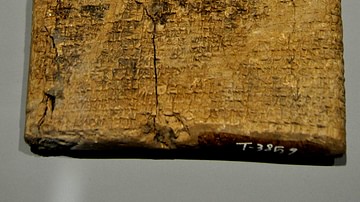
Historical Fiction of Mesopotamia

Joshua J. Mark
by
published on
bookmark_addbookmark_addedSave Collection

Historical fiction is frequently dated to works including the Iliad of Homer (8th century BCE) or The Tale of Genji (11th century CE) or, in English, to the 19th century, usually to the works of Sir Walter Scott, but the genre has more ancient origins dating back to the 2nd millennium BCE through Mesopotamian naru literature.

Mesopotamian naru literature features a famous historical figure, usually a king, in a fictional set of circumstances. The purpose of the genre was to entertain while also instructing an audience, often on the proper relationship one should have with the gods and one’s place in the universe. The best-known piece from this genre is The Epic of Gilgamesh (written c. 2150-1400 BCE and based on earlier works), which presents the historical king of Uruk in a fictional tale on the theme of the meaning of life.

This collection presents the most famous works of Mesopotamian naru literature as well as two pieces explaining the genre. Examples of these kinds of works may be found in other cultures outside of Mesopotamia, and many of these have been interpreted as actual history when, in fact, they are early paradigms of historical fiction.

Articles & Definitions

Mesopotamian Naru Literature
Definition

Mesopotamian Naru Literature - The World's First Historical Fiction

Mesopotamian Naru Literature was a literary genre, first appearing around the 2nd millennium...
Truths Wrapped in Fiction: Mesopotamian Naru Literature
Article

Truths Wrapped in Fiction: Mesopotamian Naru Literature - Originality in Writing Ancient Bestsellers

Originality in literary compositions in the ancient world did...
Gilgamesh
Definition

Gilgamesh

Gilgamesh is the semi-mythic King of Uruk best known as the hero of The Epic of Gilgamesh (c. 2150-1400 BCE) the great Babylonian poem...
The Eternal Life of Gilgamesh
Article

The Eternal Life of Gilgamesh

The Epic of Gilgamesh is among the most popular works of literature in the present day and has influenced countless...
Sargon and Ur-Zababa
Article

Sargon and Ur-Zababa - Two Dream Visions and a River of Blood

Sargon and Ur-Zababa is a Sumerian poem, date of composition unknown, relating the rise to...
The Legend of Sargon of Akkad
Article

The Legend of Sargon of Akkad - Inspiration for the Story of Moses

The Legend of Sargon of Akkad (circa 2300 BCE) is an Akkadian work from Mesopotamia understood...
The Legend of Cutha
Article

The Legend of Cutha - A How-To on the Proper Relationship with One's God

The Legend of Cutha (also known as the Cuthean Legend of Naram-Sin, Cutha Legend...
The Curse of Agade
Article

The Curse of Agade - Naram-Sin's Fictional Battle with the Gods

The Curse of Agade (also given as The Cursing of Agade) is a poem dated to the Ur III period...
Matter of Aratta
Article

Matter of Aratta

The Matter of Aratta is the modern-day title for a collection of four poems – Enmerkar and the Lord of Aratta, Enmerkar and En-suhgir-ana...
The Death of Ur-Nammu
Article

The Death of Ur-Nammu - The Sumerian Vision of the Afterlife

The Death of Ur-Nammu is a Sumerian lament over the passing of the king Ur-Nammu (reign circa...

Illustrations

Questions & Answers

What is Mesopotamian naru literature?

Mesopotamian naru literature is, essentially, the earliest form of historical fiction in which an actual historical figure is depicted in fictional circumstances.

When was Mesopotamian naru literature first composed?

Mesopotamian naru literature dates from the 2nd millennium BCE.

What is the most famous work of Mesopotamian naru literature?

The most famous work of Mesopotamian naru literature is The Epic of Gilgamesh, which features a famous historical king in a fictional tale.

What was the purpose of Mesopotamian naru literature?

The purpose of Mesopotamian naru literature was to entertain while also instructing an audience in cultural values, especially one's proper relationship to the gods.
Subscribe to this author

About the Author

Free for the World, Supported by You

World History Encyclopedia is a non-profit organization. Please support free history education for millions of learners worldwide for only $5 per month by becoming a member. Thank you!

World History Encyclopedia is a non-profit organization. Please support free history education for millions of learners worldwide for only $5 per month by becoming a member. Thank you!

Become a Member  

Support Us Remove Ads