
Search
Did you mean: Hanuman?
Remove Ads
Advertisement

 This answer was generated by
Search Results

Image
Human Anatomy from On the Fabric of the Human Body
A diagram of human anatomy from Andreas Vesalius' (1514-1564) celebrated book, On the Fabric of the Human Body, first published in 1543. (Wellcome Images)
Image
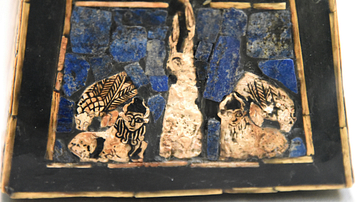
Human-Headed Bull in the Standard of Ur
This is one of the scenes depicted on one of the sides of the Standard of Ur; this is not part of the so-called "Peace and War Scenes" of the Standard. Here, at the center, there is what appears to be a tall...
Image
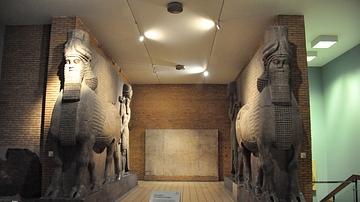
Human-Headed Winged Bulls and Genies from Khorsabad
A pair of human-headed and winged-bulls (lamassu), stood on either side of a gate at one of the citadel walls at Khorsabad. Two human-headed and winged protective spirits or genies stand behind the...

Image
Human Statue from Ain Ghazal
This statue was made of lime plaster, reed, and bitumen and was found in modern-day Ain Ghazal city in the outskirt of Amman, Jordan Hashemite Kingdom. Between 1983-1985 CE, 15 statues and 15 busts made of lime plaster...
Image
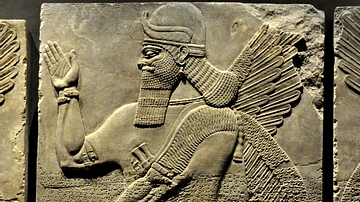
Human-headed and Winged Apkallu from Nimrud
This is an alabaster bas-relief depicting a standing human-headed and winged sage or genie; this is Apkallu, a protective spirit. He wears a horned helmet, elaborate dress, and marvellous accessories. Neo-Assyrian...
Image
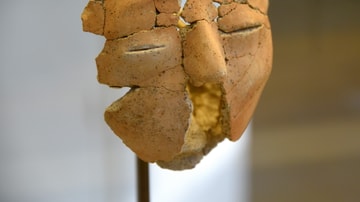
Human Skull Plaster Face, Ain Ghazal
This plastered face was modeled on a human skull and was buried with a group of similar plastered faces. This mode of skull decoration was probably related to some sort of ancestor cult. From modern-day Ain Ghazal...

Image
Human-headed Winged-bull
This is one of the few surviving sculptures from the palace which Esarhaddon left unfinished at his death. Neo-Assyrian era, circa 670 BCE. From the south-west palace at Nimrud, Mesopotamia, Iraq. (The British Museum, London...

Image
Human Sacrifice, El Tajin
A relief panel from the south ballcourt of El Tajin, Veracruz showing two players holding down and extracting the heart of a third player. A skeletal figure rises from a pot on the left side. 700-900 CE.

Article
Early Human Migration
Disregarding the extremely inhospitable spots even the most stubborn of us have enough common sense to avoid, humans have managed to cover an extraordinary amount of territory on this earth. Go back 200,000 years, however...

Image
The Human Muscles from On the Fabric of the Human Body
A diagram of the human muscles from Andreas Vesalius' (1514-1564) celebrated book on anatomy, On the Fabric of the Human Body, first published in 1543. (University of Amsterdam Collection)
