
Search Articles
Browse Content (p. 56)

Article
Social Change in the British Industrial Revolution
The British Industrial Revolution (1760-1840) witnessed a great number of technical innovations, such as steam-powered machines, which resulted in new working practices, which in turn brought many social...

Article
The Impact of the British Industrial Revolution
The consequences of the British Industrial Revolution (1760-1840) were many, varied, and long-lasting. Working life in rural and urban settings was changed forever by the inventions of new machines, the...

Article
Roman Education
Roman education had its first 'primary schools' in the 3rd century BCE, but they were not compulsory and depended entirely on tuition fees. There were no official schools in Rome, nor were there buildings used specifically for...

Article
Vikings in Wales
The Norse may have ruled parts of northern Wales in the early 11th century, specifically in Anglesey and Gwynedd, though the degree to which is unclear. Old Norse had relatively little impact on Welsh linguistics, and the Old...

Article
Why the Industrial Revolution Started in Britain
The Industrial Revolution saw a wave of technological and social changes in many countries of the world in the 18th and 19th centuries, but it began in Britain for a number of specific reasons. Britain...
Article
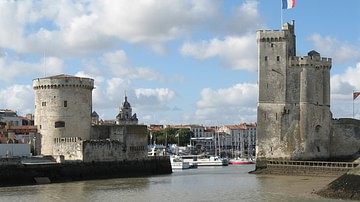
La Rochelle, a Protestant Stronghold of the French Reformation
La Rochelle emerged early in the French Reformation as a Protestant political and military center. The city's fortifications withstood repeated sieges over the years. In 1627, La Rochelle was...

Article
Child Labour in the British Industrial Revolution
Children were widely used as labour in factories, mines, and agriculture during the British Industrial Revolution (1760-1840). Very often working the same 12-hour shifts that adults did, children as...

Article
Plato's Greater, Better World in The Last Days of Socrates
The Last Days of Socrates is a modern-day title for the collection of four Socratic dialogues by the Greek philosopher Plato – the Euthyphro, Apology, Crito, and Phaedo – telling the story of...

Article
Plato: The Name and The Poet
Plato (l. c. 424/423 to 348/347 BCE), the Greek philosopher whose works have significantly shaped Western thought and religion, is said to have initially been a poet and playwright and, even if the primary source of...

Article
Plato's Euthyphro: An Overlooked Comedy
Plato's Euthyphro is a Socratic dialogue on the concept of piety whose meaning and purpose continue to be debated. In reading the work only as a serious inquiry into the definition of an abstract concept, however...
