
Search Articles
Browse Content (p. 152)
Article
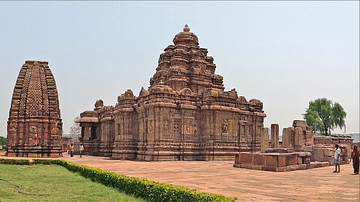
The Temples of Pattadakal
The history of Pattadakal goes back to a time when it was called Kisuvolal, a valley of red soil. It even found a mention in Ptolemy's Geography in the 2nd century CE. Presently Pattadakal is located in the district of...

Article
Cuneiform Lexical Lists
Lexical lists are compilations of cuneiform signs and word readings written on clay tablets throughout Mesopotamia. From the late 4th millennium BCE up to the 1st century CE, scribal communities copied, modified, and passed...

Article
Hoysala Architecture
The Hoysala era (1026 CE – 1343 CE) was marked by illustrious achievements in art, architecture, and culture. The nucleus of this activity lay in the present day Hassan district of Karnataka, India. The most remarkable accomplishment...

Article
The Phoenicians - Master Mariners
Driven by their desire for trade and the acquisition of such commodities as silver from Spain, gold from Africa, and tin from the Scilly Isles, the Phoenicians sailed far and wide, even beyond the Mediterranean's...

Article
Daily Life in Ancient China
Daily life in ancient China changed through the centuries but reflected the values of the presence of gods and one's ancestors in almost every time period. Villages like Banpo show evidence of a matriarchal society, where...

Article
Old Testament Pseudepigrapha
The Old Testament Pseudepigrapha are the non-canonical writings of Judaism and Christianity, ranging from the 5th century BCE to the 9th century CE. Pseudepigrapha comes from a Greek noun denoting writings with a false...

Article
The Aztec Calendar
The Aztecs of ancient Mexico measured time with a sophisticated and interconnected triple calendar system which followed the movements of the celestial bodies and provided a comprehensive list of important religious festivals...

Article
Most Popular Gods & Goddesses of Ancient China
There were over 200 gods and goddesses worshipped throughout ancient China, but if one were to count every deity or spirit, the number would be over 1,000. Each town, village, city, field, farm, and sometimes...

Article
Greek Theatre Architecture
The ancient Greeks built open-air theatres where the public could watch the performances of Greek comedy, tragedy, and satyr plays. They then exported the idea to their colonies throughout the Aegean so that theatres became...

Article
Religion in Ancient China
Religious practices in ancient China go back over 7,000 years. Long before the philosophical and spiritual teachings of Confucius and Lao-Tzu developed or before the teachings of the Buddha came to China, the people worshipped...
