


This fragmentary statue of the pharaoh Akhenaten (Amenhotep IV) dates from the Amarna Period (c. 1353-1336 BCE), and was originally housed in a temple complex to the Aten near Karnak, in what is now modern-day Luxor. Currently on display in the Louvre Museum in Paris, it is a prime example of the exaggerated "Amarna Art" style. In almost all official court artwork, Akhenaten is depicted in a highly stylistic manner, with an elongated face, distorted facial features, spindly limbs and a feminine body shape. It is unlikely that the king actually looked this strange; rather, his appearance was likely exaggerated for symbolic/religious reasons.
About the Author
Related Images
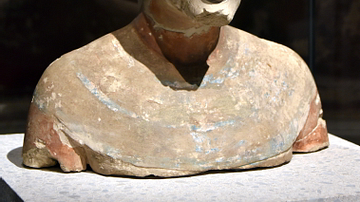
Bust of Akhenaten from Amarna

Map of Amarna, Egypt

Map of the ancient Near East during the Amarna Period

Akhenaten & Nefertiti
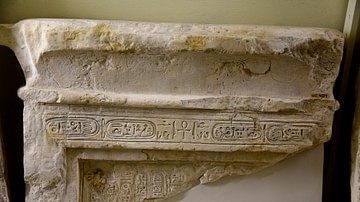
Stela of Akhenaten

Akhenaten and the Royal Family Blessed by Aten
Cite This Work
APA Style
McLaughlin, E. (2017, July 26). Statue of Akhenaten. World History Encyclopedia. https://www.worldhistory.org/image/6913/statue-of-akhenaten/
Chicago Style
McLaughlin, Elsie. "Statue of Akhenaten." World History Encyclopedia, July 26, 2017. https://www.worldhistory.org/image/6913/statue-of-akhenaten/.
MLA Style
McLaughlin, Elsie. "Statue of Akhenaten." World History Encyclopedia, 26 Jul 2017, https://www.worldhistory.org/image/6913/statue-of-akhenaten/.
