


Statue of Charles Martel at the Château de Chambord, photograph by Babeth Étiève-Cartwright, France, 30 October, 2025.
Charles Martel (r. 718-741) was the illegitimate son of Pepin II (r. 687-714), and his concubine Alpaïde, born while he had temporarily repudiated his wife Plectrude. Although a ‘bastard’, Charles came from a powerful noble family, the Peppinids, and his formidable energy earned him the nickname Martel (the hammer). Following his father's death in 714, he was imprisonned by Plectrude, the first wife of Pepin II but, taking advantage of the general unrest of the time, he escaped and took the lead of the Austrasian rebels. Charles would unify the Merovingian state and ward off numerous external attacks from various Germanic tribes. He is best remembered for his victory over the Arab invasion at Poitiers (alias Battle of Tours in 732). His son Pepin the Short (r. 751-768) would later found the Carolingian dynasty.
About the Author
Related Images

Queen's Apartment of Château de Chambord

Chateau de Chambord

Aerial View, Chateau de Chambord
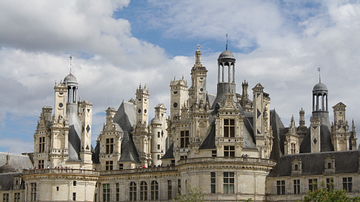
Chimneys, Chateau de Chambord
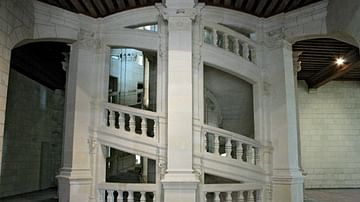
Spiral Staircase, Chateau de Chambord
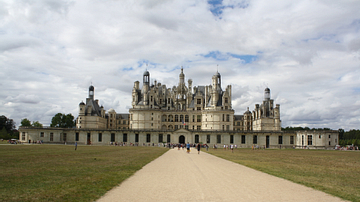
Chateau de Chambord, Front Facade
Cite This Work
APA Style
Étiève-Cartwright, B. (2025, November 30). Statue of Charles Martel. World History Encyclopedia. https://www.worldhistory.org/image/21282/statue-of-charles-martel/
Chicago Style
Étiève-Cartwright, Babeth. "Statue of Charles Martel." World History Encyclopedia, November 30, 2025. https://www.worldhistory.org/image/21282/statue-of-charles-martel/.
MLA Style
Étiève-Cartwright, Babeth. "Statue of Charles Martel." World History Encyclopedia, 30 Nov 2025, https://www.worldhistory.org/image/21282/statue-of-charles-martel/.
