



This infographic illustrates the complexity and layered dynamics of Ancient Roman society. Structured by wealth, citizenship, ancestry, political privilege, and freedom, Roman social order was rigid yet fluid. Although status was sharply defined—especially by gender, with women’s roles tied to fathers or husbands—individuals could move between social contexts, creating overlapping hierarchies and shifting influence.
Despite legal distinctions between classes, Roman society was marked by constant interaction across its strata. The Roman Republic, with its emphasis on law, civic duty, and representation, became a powerful political model. Its legacy endures today, notably in the structure and principles of the United States government.
About the Author
Related Images

Cleric, Knight, and Workman Representing the Three Classes
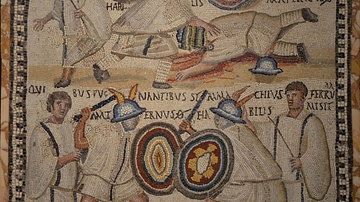
Equites Gladiator Mosaic

Government of the Roman Republic

Senate Vote Against Versailles Treaty 1920

The United States Constitution, 1787

The Feudal Society in Medieval Europe
Cite This Work
APA Style
Netchev, S. (2023, May 09). Ancient Roman Society and Social Order. World History Encyclopedia. https://www.worldhistory.org/image/17368/ancient-roman-society-and-social-order/
Chicago Style
Netchev, Simeon. "Ancient Roman Society and Social Order." World History Encyclopedia, May 09, 2023. https://www.worldhistory.org/image/17368/ancient-roman-society-and-social-order/.
MLA Style
Netchev, Simeon. "Ancient Roman Society and Social Order." World History Encyclopedia, 09 May 2023, https://www.worldhistory.org/image/17368/ancient-roman-society-and-social-order/.
