
Search
Remove Ads
Advertisement
Search Results

Definition
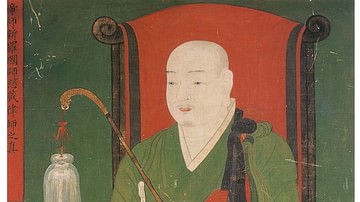
Saichō
Saichō, also known as Dengyo Daishi (767-822 CE), was a monk and scholar who founded the Buddhist Tendai Sect in Japan. Based on the teachings of the Chinese Tiantai Sect, Saichō's simplified and inclusive version of Buddhism grew in...
Article
Famous Buddhist Monks of Ancient Korea
Throughout ancient Korea's history Buddhist monks were a particularly important element of state and religious affairs. From the 4th century CE onwards, in the Three Kingdoms period, they were members of a select...

Image
Zen Rock Garden, Ryoanji
The Zen rock garden of Ryoanji temple, Kyoto, Japan. The garden dates to c. 1500 CE but the exact significance of its 15 stones is unknown except that they are designed to promote meditation.

Article
Tibetan Sand Mandalas
Tibetan sand mandalas are works of art created to encourage healing, peace, and purification generally as well as spiritual or psychological focus specifically for those creating and viewing it. A mandala (Sanskrit for "circle"...

Interview
Rubin Museum's Faith and Empire: Tibetan Buddhist Art
Faith and Empire: Art and Politics in Tibetan Buddhism, a new exhibition at the Rubin Museum of Art in New York, explores the dynamic historical intersection of politics, religion, and art as reflected...

Collection
History of Buddhism
Buddhism began in the region of modern-day India, founded by Siddhartha Gautama (the Buddha, l. c. 563-c. 483 BCE), and developed between c. 400-383 BCE before it spread to other regions through the efforts of the Mauryan king...

Definition
Tara
Tara is a female deity in both Hinduism and Buddhism who personifies compassion and offers salvation from the suffering of rebirth and death. She is thought to have been born of empathy for the suffering world and is regularly invoked...

Definition
Ashoka the Great
Ashoka the Great (r. 268-232 BCE) was the third king of the Mauryan Empire (322-185 BCE) best known for his renunciation of war, development of the concept of dhamma (pious social conduct), and promotion of Buddhism as well as...

Interview
Interview: Bejeweled Sri Lanka
The first comprehensive survey of Sri Lankan art organized by an American museum, The Jeweled Isle: Art from Sri Lanka, on show now at the LACMA in Los Angeles, California, presents some 250 works addressing nearly...
Image
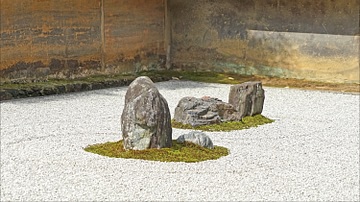
Detail, Ryoanji Zen Rock Garden
A detail of the Zen rock garden of Ryoanji temple, Kyoto, Japan. The garden dates to c. 1500 CE but the exact significance of its 15 stones is unknown except that they are designed to promote meditation.
