
Search
Did you mean: Nile?
Remove Ads
Advertisement
Search Results

Definition
Geoffrey Chaucer
Geoffrey Chaucer (l. c. 1343-1400 CE) was a medieval English poet, writer, and philosopher best known for his work The Canterbury Tales, a masterpiece of world literature. The Canterbury Tales is a work of poetry featuring a group...

Definition
Oda Nobunaga
Oda Nobunaga was the foremost military leader of Japan from 1568 to 1582. Nobunaga, along with his two immediate successors, Toyotomi Hideyoshi (1537-1598) and Tokugawa Ieyasu (1543-1616), is credited with unifying medieval Japan...

Article
The Layout of a Medieval Abbey
Abbeys were a striking feature of medieval urban and rural landscapes. Their layout and architecture reflected their purpose as cut-off monastic retreats which, conversely, also served and inspired their local communities...

Article
The Life of Diogenes of Sinope in Diogenes Laertius
Diogenes of Sinope (c. 404-323 BCE) was a Greek Cynic philosopher best known for holding a lantern to the faces of the citizens of Athens claiming he was searching for an honest man. He was most likely...

Article
Etruscan Tomb Paintings
The Etruscans flourished in central Italy from the 8th to 3rd century BCE, and one of their greatest legacies is the beautifully painted tombs found in many of their important towns. Tarquinia, Cerveteri, Chiusi, and Vulci...

Article
Hipparchia the Cynic: Devoted Wife, Mother, & Outspoken Greek Philosopher
Cynic philosopher, wife of Crates of Thebes (l. c. 360 – 280 BCE), and mother of his children, Hipparchia of Maroneia (l. c. 350 – 280 BCE) defied social norms in order to live her...

Article
Death, Burial & the Afterlife in the Ancient Celtic Religion
The ancient Celts who occupied large parts of Europe from 700 BCE to 400 CE displayed a clear belief in an afterlife as evidenced in their treatment of the dead. In the absence of extensive...
Article
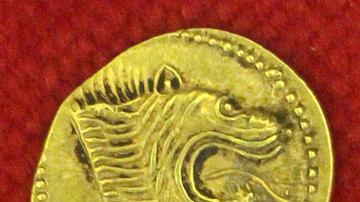
Etruscan Trade
The Etruscan civilization flourished in central Italy between the 8th and 3rd century BCE, and their prosperity was largely based on their exploitation of local mineral resources, both through manufactured goods and trade. The...

Article
Herodotus: On The Customs of the Persians
Although the Greek historian Herodotus (l. c. 484-425/413 BCE) is often criticized for inaccuracy in his Histories, his frequently-anthologized On the Customs of the Persians is regarded as accurate. The passage...
Article
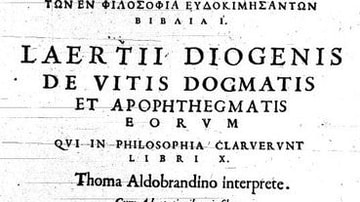
The Life of Aristippus in Diogenes Laertius
Aristippus of Cyrene (l. c. 435-356 BCE) was a hedonistic Greek philosopher who taught that the meaning of life was pleasure and that the pursuit of pleasure, therefore, was the most noble path one could...
