
Search
Remove Ads
Advertisement
Search Results
Definition
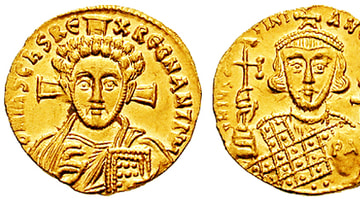
Justinian II
Justinian II “the Slit-nosed” ruled as emperor of the Byzantine Empire in two spells: from 685 to 695 CE and then again from 705 to 711 CE. It was after his first reign and prior to his exile that his nose was cut off by the usurper...

Definition
Möngke Khan
Mongke Khan was ruler of the Mongol Empire (1206-1368 CE) from 1251 to 1259 CE. As the third Great Khan or 'universal ruler' of the Mongols, Mongke would oversee administrative reforms that continued to centralise government and ensure...

Definition
Ancient Persian Government
The government of ancient Persia was based on an efficient bureaucracy which combined the centralization of power with the decentralization of administration. The Achaemenid Empire (c. 550-330 BCE) founded by Cyrus the...

Definition
Islamic Caliphates
Caliphate (“Khilafat” in Arabic) was a semi-religious political system of governance in Islam, in which the territories of the Islamic empire in the Middle East and North Africa and the people within were ruled by a supreme...

Definition
Cimbri
The Cimbri were a tribe who lived in northern Jutland during the Roman era. Their ethnicity is enigmatic; scholars generally believe that the Cimbri were Germans, though others maintain that they were Celts. The late 2nd-century BCE migration...

Definition
French Revolution
The French Revolution (1789-1799) was a period of major societal and political upheaval in France. It witnessed the collapse of the monarchy, the establishment of the First French Republic, and culminated in the rise of Napoleon...
Definition
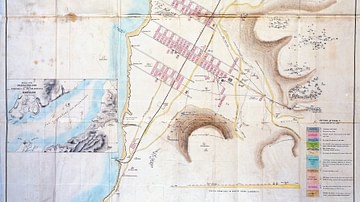
Renkioi Hospital
The Renkioi Hospital, was a complex of innovative prefabricated buildings designed by Isambard Kingdom Brunel for use during the Crimean War (1853-56). Brunel had been moved by the heavy casualties and even higher deaths via disease...
Article
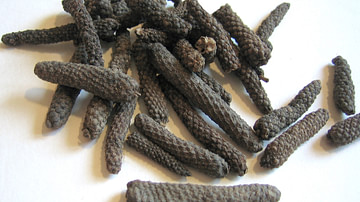
Middle Eastern Power Shifts & the Trade of Pepper from East to West
Pepper has long been the king of spices and for almost 2,000 years dominated world trade. Originating in India, it was known in Greece by the 4th century BCE and was an integral part of...

Article
The Iberian Conquest of the Americas
European explorers began to probe the Western Hemisphere in the early 1500s, and they found to their utter amazement not only a huge landmass but also a world filled with several diverse and populous indigenous...

Article
The Masaesyli and Massylii of Numidia
The North African Berber kingdom of Numidia (202-40 BCE) was originally inhabited by a tribe (or federation of tribes) known as the Masaesyli, to the west, and a coalition of smaller tribes, known as the Massylii...
