
Search
Search Results

Definition
Marcus Agrippa
Marcus Vipsanius Agrippa (l. 64/62 – 12 BCE) was Augustus' (r. 27 BCE - 14 CE) most trusted and unshakably loyal general and his right-hand man in the administration of the city of Rome. Although his name is forever connected with the first...
Image
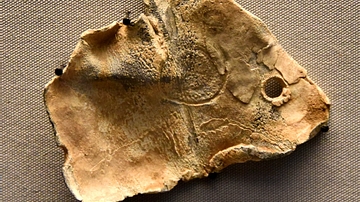
Lead Sheet with Coin Impression
This sheet is decorated with an impression of a coin of the Emperor Valens (Flavius Julius Valens Augustus), 364-378 CE. It may have been intended as a curse against the Emperor. From Fulstow, UK. Donated by Tom Redmayne. (The British Museum...
Definition
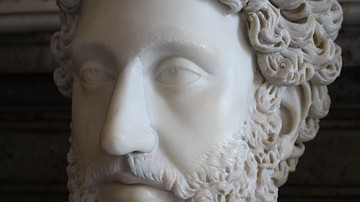
Roman Emperor
Roman emperors ruled the Roman Empire starting with Augustus in 27 BCE and continuing in the West until the late 5th century CE and in the Eastern Roman Empire up to the mid-15th century CE. The emperors took titles such as Caesar and Imperator...

Definition
Roman Architecture
Roman architecture continued the legacy left by Greek architects and the established architectural orders, especially the Corinthian. The Romans were also innovators and they combined new construction techniques and materials with creative...

Article
Continuity and Change after the Fall of the Roman Empire
The cataclysmic end of the Roman Empire in the West has tended to mask the underlying features of continuity. The map of Europe in the year 500 would have been unrecognizable to anyone living a hundred years earlier. Gone was the solid boundary...

Definition
Roman Science
The Romans assimilated earlier Greek science for their own purposes, evaluating and then accepting or rejecting that which was most useful, much as they did in other fields such as warfare, art, and theatre. This assimilation of Greek thought...

Definition
Vitruvius
Marcus Vitruvius Pollio (c. 90 - c. 20 BCE), better known simply as Vitruvius, was a Roman military engineer and architect who wrote De Architectura (On Architecture), a treatise which combines the history of ancient architecture and engineering...
Definition
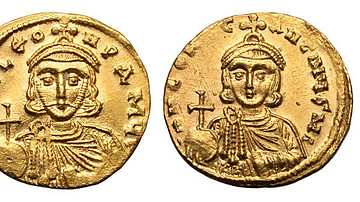
Constantine V
Constantine V, also known as Constantine the Dung-named by his enemies, was emperor of the Byzantine empire from 741 to 775 CE. He enjoyed military successes in the Middle East and Balkans but his reign is chiefly remembered for his systematic...

Article
Visual Chronology of Roman Emperors: Augustus to Constantine
The Julio-Claudian Dynasty Augustus 16 Jan 27 BCE - 19 Aug 14 CE Tiberius 18 Sep 14 CE - 16 Mar 37 CE Caligula 18 Mar 37 CE - 24 Jan 41 CE Claudius 25 Jan 41 CE - 13 Oct 54 CE Nero 13 Oct 54 CE - 11 Jun 68 CE Galba 8 Jun 68 CE -...
Article
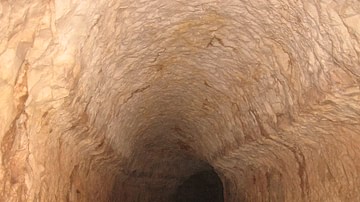
Roman Tunnels
The first tunnels in the Mediterranean were built to transport water from distant springs and mountains to arid areas and cities. They also ensured the constant supply of water when cities were under siege. For example, the 533 m (583 yards...
