
Search
Remove Ads
Advertisement
Search Results

Definition
Yazidism
Yazidism is a syncretic, monotheistic religion practiced by the Yazidis, an ethnoreligious group which resides primarily in northern Iraq, northern Syria, and southeastern Turkey. Yazidism is considered by its adherents to be the oldest religion...
Definition
Anjar
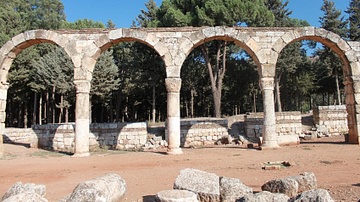
The city of Anjar stands as the single Umayyad site in Lebanon, located near the Litani River and 58 km from the capital of Beirut. Anjar was founded during the Umayyad period under Caliph Walid ibn 'Abd al-Malak (r. 705-715 CE) and takes...

Image
Map of the Islamic Conquests in the 7th-9th Centuries
This map illustrates the rise and rapid expansion of Islam from the time of the Prophet Muhammad (622–632 CE) through the great caliphates of the 7th to 9th centuries. Beginning in Arabia, the new faith and its armies spread under the Rashidun...
Image
Anjar, Lebanon
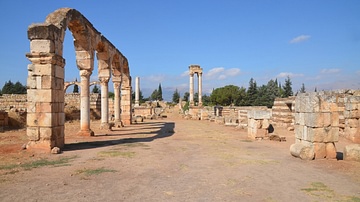
The ancient city of Anjar is the sole Umayyad settlement in Lebanon, founded during the 8th century CE Umayyad caliphate. It is located in the Bekaa Valley, 47 kilometres (29 miles) south of Baalbek.

Article
Byzantine-Armenian Relations
The relationship between the Byzantine Empire and ancient Armenia was a constant and varied one with an equal mix of wars, occupations, treaties of friendship, mutual military aid, and cultural exchange. Regarded as a vital defence to the...

Definition
Rashidun Government
The Rashidun Caliphate (632-661 CE) was responsible for setting up the basis of the Islamic empire and expanding its borders beyond the Arabian soil. These leaders were selected by the consent of the people and based on their own merits...
Definition
Minaret
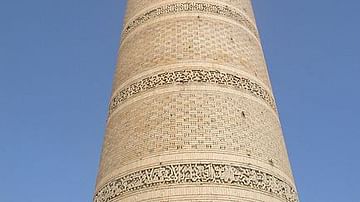
A minaret is a feature of Islamic architecture and is the place from where the call to prayer is sent out. They are also known as a manār or manāra in Arabic, meaning place of fire or light (nar or nur). According to scholars, the expression...

Image
Map of the Taifa Kingdoms of al-Andalus (c. 1031–1086) - Iberian Peninsula on the Eve of the Almoravid Intervention
The political fragmentation of al-Andalus began with the collapse of the Umayyad Caliphate of Córdoba (756–1031), culminating in its formal dissolution in 1031. In the power vacuum that followed, the Iberian Peninsula fractured into dozens...

Image
Expansion of Early Islamic Caliphates
This map shows the expansion of the Islamic Caliphates in the 7th and 8th Centuries CE: 1. Dark Shade: Expansion under the Prophet Muhammad, 622-632 CE. 2. Medium Shade: Expansion under the Rashidun Caliphate, 632-661 CE. 3. Light Shade...

Image
Battle of Tours, 732
"Bataille de Poitiers, en octobre 732" (French for "Battle of Poitiers, in October 732") by Charles de Steuben (1788 - 1856). The painting is a romanticized depiction of the Frankish general Charles Martel (718-741) fighting against the Umayyad...
